The evolution of residential and commercial energy storage is no longer driven by simple backup needs. It is now defined by systems capable of delivering sustained power, high discharge performance, and long-term operational stability under real-world conditions.
The Pytes V16 energy storage system reflects this shift clearly. Built on a 51.2V lithium iron phosphate (LFP) platform with a 314Ah cell architecture and 16kWh rated capacity, it is engineered for users who require higher energy density, stronger load support, and reliable operation across both residential and light commercial environments.
Unlike conventional low-power storage units designed only for short backup cycles, the V16 is structured to function as an active energy node within a hybrid or off-grid system, supporting continuous loads and high transient demand scenarios.
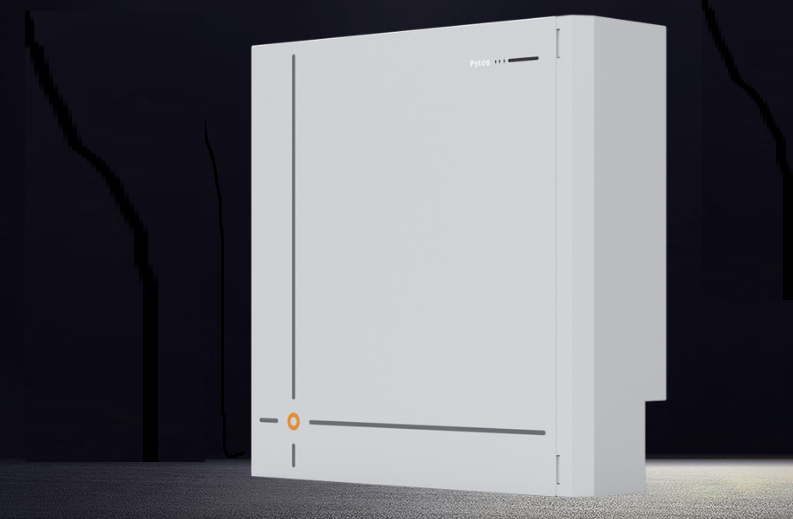
At its core, the V16 is based on LFP chemistry, which is widely recognized for its thermal stability and long lifecycle performance. The system delivers 16kWh of usable energy at a nominal 51.2V, with a design optimized for both efficiency and durability.
In practical operation, the battery supports a recommended discharge current of 150A, equivalent to 7.68kW of continuous output, while the recommended charge current reaches 125A or 6.4kW. For higher demand scenarios, the system can sustain up to 200A continuous charge and discharge, and handle short bursts up to 300A for 15 seconds, delivering peak power of 15.36kW.
This performance profile allows the V16 to support energy-intensive applications such as HVAC systems, multi-appliance residential loads, and commercial equipment requiring short-duration high current draw without system instability.
The cycle life is rated at 8000 cycles under standard conditions, which translates into long-term operational stability and predictable energy throughput over its service life.
Safety is a central design consideration in high-capacity lithium systems, and the V16 integrates multiple protection layers to ensure stable operation under varying conditions. The system uses Tier 1 automotive-grade 314Ah LFP cells combined with a mature BMS architecture that manages voltage balancing, thermal monitoring, and overcurrent protection.
A built-in aerosol fire suppression module provides additional thermal event mitigation, while an ESS-level emergency shutdown function allows system isolation under abnormal conditions. These protections are complemented by certifications including UL 9540 Ed.3 (2023), UL 9540A, UL 1973, and UN 38.3, ensuring compliance with both stationary storage and transportation safety standards.
Environmental adaptability is another defining characteristic of the V16. The enclosure is rated IP66, offering full protection against dust ingress and high-pressure water exposure, making it suitable for both indoor and outdoor installations without additional protective housing in most cases. The system is also designed with C4-M corrosion resistance, allowing deployment in coastal or industrial environments where humidity and salt exposure are concerns.
Operating temperature range is broad, supporting discharge from -20°C to 55°C and charging from 0°C to 55°C. Relative humidity tolerance reaches up to 95% non-condensing, and the system is designed for stable performance at altitudes up to 3000 meters.
For low-temperature environments, the V16 integrates a 500W internal heating film. This system activates automatically when temperatures drop to around 5°C and deactivates above 15°C. It ensures that charging only occurs within safe electrochemical conditions, preventing degradation risks associated with low-temperature lithium operation. External energy input from PV, grid, or generator is required for heating operation.
Installation flexibility is another key advantage of the system. The V16 supports both wall-mounted and floor-mounted configurations, with optional mounting trays for ground installation. This allows deployment in constrained residential utility spaces as well as dedicated commercial energy rooms.
System integration is designed for compatibility with mainstream inverter platforms through closed-loop communication protocols. Supported interfaces include CAN, RS485, RS232, dry contact, and WiFi, enabling full integration into hybrid inverter systems and energy management platforms. Remote monitoring and firmware upgrade capabilities further enhance operational visibility and long-term maintainability.
The physical design maintains a compact industrial footprint despite its high capacity, with dimensions of approximately 688 × 260 × 700 mm and a weight of 130.5 kg. A plug-and-play Phoenix DC connector system simplifies installation and reduces wiring complexity, supporting faster deployment in multi-unit configurations.
From a lifecycle perspective, the V16 is engineered for long-term economic efficiency. With a design life of 8000 cycles or 10 years (whichever comes first), the system delivers an estimated total throughput energy of approximately 92 MWh under standard operating conditions. This provides predictable long-term energy output, which is critical for applications focused on energy cost optimization and system ROI planning.
The positioning of the V16 reflects a broader shift in energy storage architecture. It is no longer just a backup solution but a functional energy system component capable of supporting both grid-interactive and off-grid scenarios. With high discharge capability, advanced safety systems, environmental resilience, and full inverter integration, it is designed to operate as a stable energy backbone in modern distributed energy systems.
As energy systems continue to move toward decentralization and higher renewable penetration, solutions like the Pytes V16 are increasingly aligned with real operational needs rather than theoretical capacity metrics. It represents a transition toward storage systems that are not only larger in capacity, but more capable in actual system-level performance.