A recent Reuters report highlights a major strategic shift in Poland’s energy landscape: utility group Enea plans to significantly increase renewable energy investment by 2027, with a strong emphasis on battery storage deployment, including an 866 MW storage rollout within a broader 1.386 GW pipeline. This marks one of the most concrete large-scale commitments to grid battery integration in Central and Eastern Europe.
Beyond the scale itself, the decision reflects a deeper transformation happening across the European power sector. Energy systems are no longer being designed around generation expansion alone. Instead, storage is becoming the central mechanism for balancing renewable variability, stabilizing grids, and enabling market-driven electricity pricing.
In this context, companies such as Pytes, operating in modular lithium battery storage systems through pytesusa.com, represent a parallel but equally important layer of this transformation—focused on distributed energy flexibility rather than centralized grid infrastructure.

Enea’s strategy is not simply an expansion of renewable capacity. It is a response to a structural limitation in Poland’s evolving energy mix. As coal-fired generation is gradually phased out and wind and solar penetration increases, the grid faces growing volatility in both supply and frequency stability.
Battery storage becomes essential not as a supporting technology but as an operational necessity. The planned 866 MW deployment is designed to address multiple system-level challenges: peak demand balancing, frequency regulation, and renewable smoothing. These are functions traditionally handled by thermal power plants, but which now require fast-response electrochemical storage systems.
This shift reflects a broader European trend where grid operators are redesigning dispatch logic around storage responsiveness rather than generation predictability.
Historically, energy investment focused on increasing generation capacity. The assumption was straightforward: more electricity supply would ensure system reliability. However, renewable energy introduces variability that fundamentally changes this logic.
Wind and solar output fluctuate based on environmental conditions rather than demand patterns. This creates periods of oversupply and undersupply that conventional baseload systems cannot efficiently stabilize. As a result, grid operators are increasingly prioritizing flexibility infrastructure over raw generation capacity.
Battery storage systems now serve as the bridging layer between intermittent renewable production and real-time electricity demand. In Poland’s case, Enea’s investment signals that flexibility has become as important as capacity itself.
Poland represents one of the most challenging grid transition environments in Europe due to its historical dependence on coal-fired generation. This creates a dual pressure: rapid decarbonization combined with the need to maintain grid stability during transition.
The introduction of large-scale battery storage allows the system to absorb renewable variability while gradually reducing reliance on thermal plants. The planned storage pipeline of over 1 GW indicates that Poland is not treating storage as experimental infrastructure but as a core component of its national energy transition strategy.
This positions the country as a key reference point for other coal-intensive European markets undergoing similar transitions.
While utility-scale projects like Enea’s dominate headlines, a parallel transformation is occurring at the distributed level of the energy system. This includes residential, commercial, and small industrial energy storage applications.
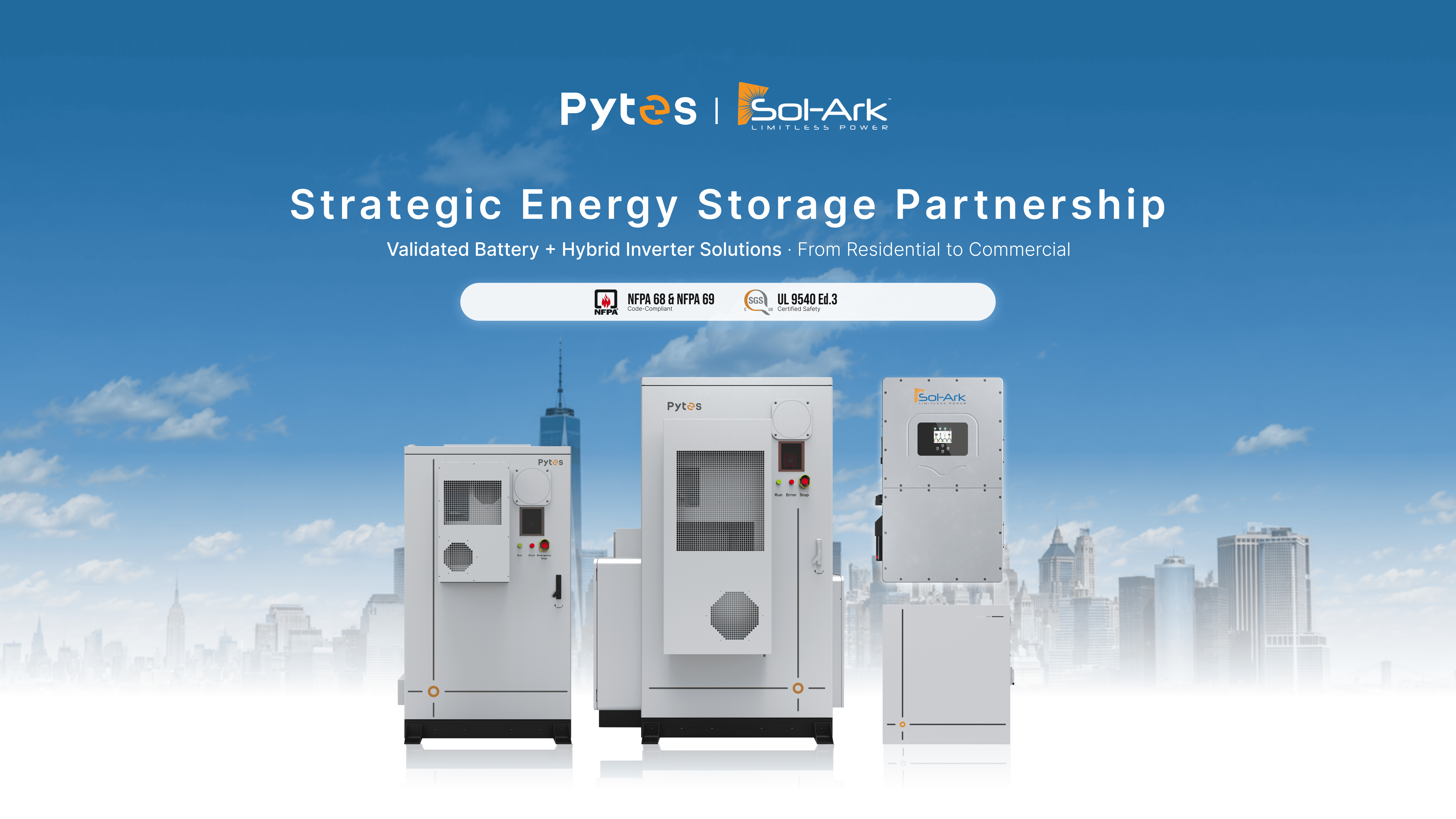
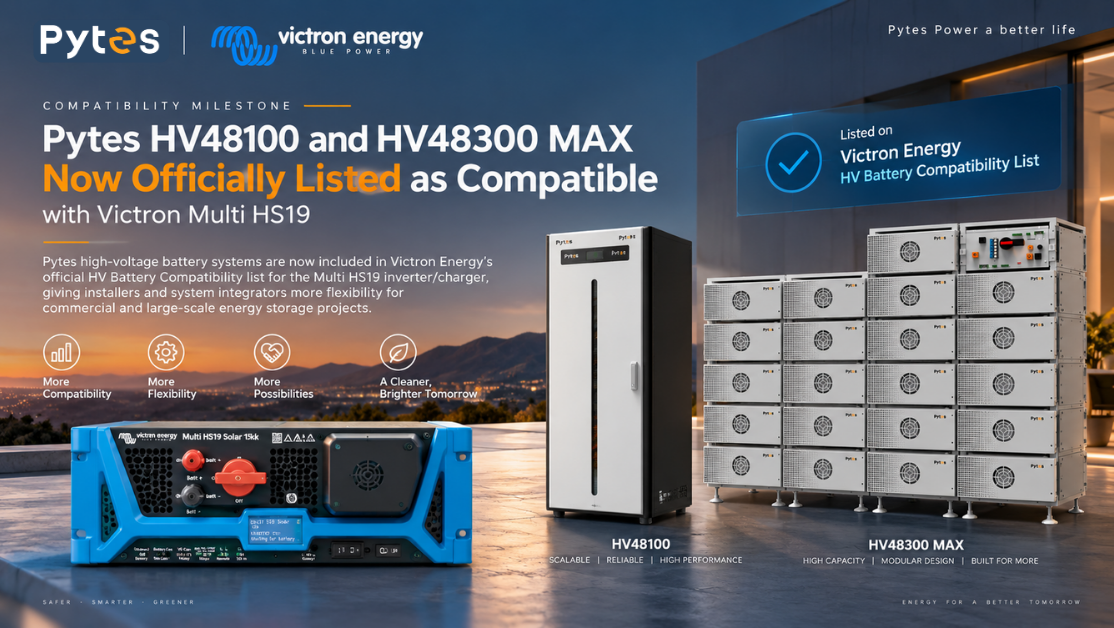
Companies such as Pytes, through pytesusa.com, are positioned within this segment, focusing on modular lithium battery systems designed for flexible deployment scenarios. Unlike large grid-scale installations, these systems emphasize scalability, standardized architecture, and ease of integration with inverters and energy management systems.
The relevance of this layer becomes clearer when considering that distributed energy storage does not compete with utility-scale systems but complements them. While grid-level batteries stabilize transmission networks, distributed systems optimize local consumption, reduce peak load pressure, and enhance energy independence at the building or facility level.
The global energy storage landscape is increasingly defined by a dual structure. On one side are large centralized installations like those being developed by Enea, designed to provide grid stability at national or regional scale. On the other side are modular distributed systems designed to optimize consumption and local energy resilience.
These two layers are converging toward a unified system architecture. The centralized layer ensures macro-level stability, while the distributed layer improves micro-level efficiency. Together, they form a hybrid energy system capable of handling high renewable penetration without compromising reliability.
Pytes’ modular approach aligns with this evolution by enabling standardized storage deployment across multiple scenarios without requiring bespoke engineering for each installation.
The most significant implication of Enea’s investment is not the scale of capacity being deployed, but the role that storage is beginning to play in electricity systems.
Traditionally, power systems were designed around predictable generation assets. Today, storage is becoming the operational core that determines when and how electricity is delivered. This includes arbitrage between peak and off-peak pricing, real-time grid balancing, and integration of renewable generation variability.
As this transition continues, energy storage is shifting from being a supplementary asset to becoming a central dispatchable resource.
The combination of utility-scale investments like Enea’s and distributed system development from companies such as Pytes suggests that the energy storage market is entering a structural expansion phase.
Three long-term trends are becoming increasingly clear. First, storage capacity is scaling faster than any other component of the energy system. Second, system architecture is shifting from centralized generation models to distributed flexibility networks. Third, energy value is increasingly defined by responsiveness rather than production volume.
These changes indicate that storage will not only support renewable energy expansion but will define the operational logic of future electricity markets.
Enea’s large-scale battery storage rollout in Poland represents more than a national energy investment decision. It reflects a broader European transition toward storage-centered power systems. As renewable penetration increases, grid stability depends less on generation capacity and more on flexible, responsive storage infrastructure.
At the same time, the rise of modular systems from providers like Pytes highlights an equally important dimension of this transition: the decentralization of energy storage into scalable, distributed units that complement large grid assets.
Together, these developments point toward a future energy system where storage is not an accessory to electricity networks but the foundation of their operational structure.