The global battery industry is entering a completely different stage of competition. For years, market growth was mainly driven by electric vehicles and large-scale renewable energy projects. Now, a new wave of demand is emerging from AI infrastructure, unstable power grids, rising electricity costs, and the growing need for decentralized energy systems.
A recent Bloomberg industry report pointed out that batteries are rapidly becoming mainstream infrastructure rather than supplementary energy products. This shift is not only changing how batteries are manufactured, but also redefining what customers expect from modern energy storage systems.
Today’s users are no longer satisfied with simply buying battery capacity. They want systems that are easier to install, simpler to expand, safer to operate, and capable of supporting long-term energy independence.
This is exactly where companies like Pytes are reshaping the conversation around energy storage.
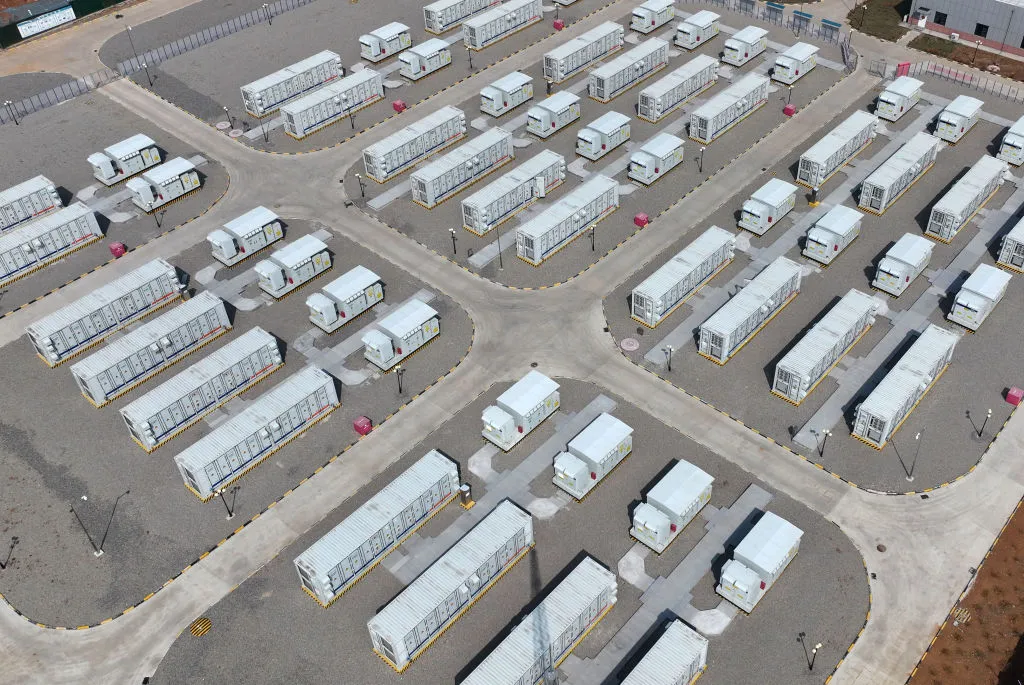
Across global markets, batteries are increasingly moving into roles traditionally associated with critical infrastructure.
In residential environments, homeowners are using storage systems to reduce grid dependence, manage electricity costs, and improve backup power capability during outages. In commercial applications, businesses are adopting storage systems to stabilize operating costs and improve energy resilience.
At the same time, AI-driven data centers are creating an entirely new category of electricity demand. High-density computing environments require highly stable power architecture, which is accelerating investment in battery storage, microgrids, and distributed energy systems worldwide.
This broader transition is changing the definition of energy storage. Batteries are no longer viewed as optional accessories attached to solar systems. They are becoming active components of modern power management.
As storage adoption expands globally, one challenge continues to slow deployment: system complexity.
Many traditional energy storage systems still involve:
· complicated installation procedures,
· difficult scalability,
· inconsistent compatibility,
· and time-consuming maintenance.
For installers and end users, these issues directly affect project efficiency and long-term operational stability.
Pytes has responded to this industry challenge by focusing on modular energy storage systems designed for practical deployment scenarios. Instead of emphasizing only theoretical performance metrics, the company’s product strategy centers on user experience and installation flexibility.
Its product portfolio includes low-voltage server rack batteries, stackable modular systems, and high-voltage storage solutions designed to simplify integration across residential and commercial applications.
This approach reflects an important market reality: in the next phase of energy storage growth, deployment efficiency may become just as important as battery chemistry itself.
Global residential storage demand continues to rise, especially in regions facing electricity price volatility and grid instability.
In Europe, homeowners are increasingly pairing storage systems with rooftop solar installations to reduce dependence on fluctuating utility prices. In North America, backup power demand continues to grow as weather-related outages become more frequent. Emerging markets are also seeing strong adoption of localized energy systems where grid reliability remains inconsistent.
Under these conditions, flexibility matters.
Many users no longer want oversized systems installed all at once. Instead, they prefer scalable solutions that can expand alongside changing household energy needs.
Pytes’ stackable modular systems align closely with this demand. Users can begin with a smaller storage configuration and gradually increase capacity as electricity consumption grows through EV charging, home electrification, or expanded solar generation.
This modular strategy also helps reduce initial investment pressure while maintaining future expansion capability.
Another major shift in the industry is the rapid growth of high-voltage energy storage outside traditional utility-scale projects.
Commercial buildings, industrial facilities, and distributed energy operators are increasingly deploying HV storage systems for:
· peak demand management,
· backup power stabilization,
· renewable energy balancing,
· and microgrid applications.
As electricity pricing structures become more dynamic, energy storage is evolving into an active operational asset rather than a passive backup device.
Pytes’ high-voltage solutions are positioned within this growing segment, where scalability and operational reliability are becoming essential for commercial energy management.
The battery industry has experienced aggressive price competition over the past several years. However, the market is beginning to shift toward long-term operational value.
Customers are paying closer attention to:
· system lifespan,
· thermal stability,
· battery management quality,
· maintenance simplicity,
· and long-term reliability.
This trend is especially visible in residential and commercial applications where energy storage systems operate daily and directly affect energy continuity.
As a result, manufacturers capable of delivering stable, user-friendly systems are increasingly gaining market attention.
Pytes’ emphasis on seamless installation and practical usability reflects this broader industry transition from short-term price competition toward long-term operational confidence.
The next stage of battery industry development is no longer centered purely on battery manufacturing volume. The focus is moving toward complete energy ecosystems capable of integrating:
· solar generation,
· battery storage,
· smart energy management,
· backup power,
· and distributed grid interaction.
This is particularly important as AI infrastructure, electrification, and renewable energy adoption continue to increase pressure on global power systems.
In this environment, energy storage companies must deliver more than hardware. They must provide systems capable of adapting to real-world energy challenges with flexibility and reliability.
Pytes’ energy storage solutions are designed around this evolving demand for scalable, user-oriented energy independence systems.
The global battery market is entering a new era where energy storage is becoming foundational infrastructure for homes, businesses, and digital industries.
As the industry evolves, market leadership will increasingly depend on:
· deployment simplicity,
· scalable system architecture,
· operational reliability,
· and long-term user experience.
This transformation is redefining how energy storage solutions are designed and deployed worldwide.
By focusing on modular flexibility, seamless installation, and practical energy independence, Pytes is aligning itself with the future direction of the global energy storage industry—where batteries are no longer just products, but essential building blocks of modern energy ecosystems.