As residential energy storage moves beyond simple backup power, homeowners are placing greater emphasis on usable capacity, installation flexibility, environmental durability, and long-term reliability. A battery system is no longer judged solely by how much energy it stores, but by how effectively it performs across years of daily cycling, changing weather conditions, and evolving household energy needs.
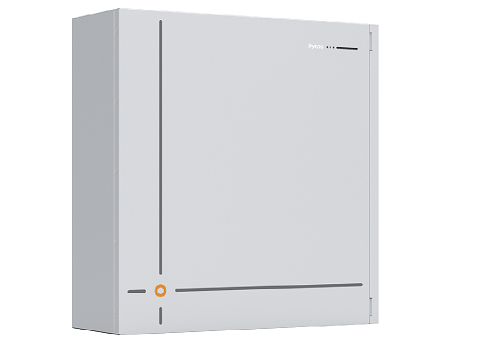
The newly launched Pytes V16 is designed with these realities in mind. Equipped with 16kWh rated energy, 314Ah automotive-grade LiFePO4 cells, an IP66-rated enclosure, and support for up to 16 units in parallel without an external hub, the V16 offers a scalable residential energy storage solution that balances power, durability, and simplicity.
For homeowners planning long-term energy independence, these specifications translate directly into practical advantages.
Many residential battery systems on the market today provide between 5kWh and 10kWh of storage per unit. While sufficient for backup applications, they may struggle to support larger homes, high-power appliances, or extended outages.
The Pytes V16 increases single-unit capacity to 16kWh, allowing users to store more solar energy during the day and use it during evening peak hours or grid outages.
Its electrical specifications include:
· Rated Voltage: 51.2V
· Rated Capacity: 314Ah
· Rated Energy: 16kWh
· Recommended Charge Current: 125A (6.4kW)
· Recommended Discharge Current: 150A (7.68kW)
These parameters enable the V16 to power multiple household loads simultaneously while maintaining stable output. High discharge capability is especially important for homes using electric cooking equipment, HVAC systems, heat pumps, or EV chargers, where momentary power demand can rise sharply.
Instead of relying on multiple smaller battery modules, homeowners can achieve larger energy reserves with fewer units, reducing installation complexity and saving wall or floor space.
Battery cell quality remains one of the most important factors affecting long-term performance.
The V16 uses Tier-1 automotive-grade 314Ah lithium iron phosphate (LiFePO4) cells, a chemistry widely recognized for its safety, thermal stability, and long service life.
Compared with traditional lithium-ion chemistries, LiFePO4 offers several advantages:
· Lower risk of thermal runaway
· High thermal and chemical stability
· Longer cycle life
· Better performance under daily charge and discharge conditions
· Stable capacity retention over years of operation
Large-format 314Ah cells also reduce the number of internal connections within the battery pack. Fewer weld points and fewer cell interconnections can contribute to improved system consistency and lower maintenance risks over time.
For homeowners expecting a battery system to operate for 10 years or more, these engineering details have a direct impact on ownership experience.
Environmental durability has become increasingly important as more residential batteries are installed outdoors.
The Pytes V16 features an IP66-rated enclosure, meaning it is completely protected against dust ingress and can withstand powerful water jets from any direction.
This level of protection allows installation in environments where standard indoor-rated batteries may not perform reliably, including:
· Outdoor walls exposed to rain
· Coastal regions with high humidity
· Dusty or sandy environments
· Semi-open garages or utility rooms
· Areas with significant temperature fluctuations
Pytes has also incorporated C4-M anti-corrosion protection, a specification commonly associated with harsh industrial and marine environments.
For households near coastlines, salt-laden air can gradually degrade metal components and shorten equipment lifespan. The C4-M protection level helps mitigate these risks and supports stable long-term operation.
The combination of IP66 sealing and corrosion resistance makes the V16 suitable for a wider range of installation scenarios without sacrificing durability.
One of the challenges of residential energy storage expansion is system complexity.
Many battery systems require additional communication hubs or external controllers when multiple units are connected together. As systems grow, wiring becomes more complicated, installation costs increase, and troubleshooting can become more difficult.
The Pytes V16 adopts a simplified architecture that allows:
· Up to 16 units connected in parallel
· Total system capacity up to 256kWh
· No external Pytes Hub required
This architecture offers several benefits.
First, homeowners can start with a smaller system and expand later as energy consumption changes. A family installing solar panels today may later add an EV charger, heat pump, or pool equipment, increasing electricity demand. The V16 enables capacity expansion without redesigning the entire system.
Second, installers can complete projects faster because there are fewer external components and communication devices to configure.
Finally, reducing system complexity often improves overall reliability by minimizing potential failure points.
Scalability is no longer just a convenience feature; it is becoming an essential requirement for future-proof residential energy systems.
As energy storage adoption grows, safety standards are becoming increasingly rigorous.
The Pytes V16 has obtained several internationally recognized certifications, including:
· UL 9540 Ed.3 (2023)
· UL 9540A
· UL 1973
· UN38.3
These certifications evaluate battery systems from different perspectives, including:
· Electrical safety
· Thermal performance
· Fire propagation behavior
· Transportation safety
· System-level energy storage compliance
For homeowners and installers, certification is more than a regulatory requirement. It provides confidence that the battery system has been tested under demanding conditions and complies with recognized industry standards.
As insurance companies and local authorities place greater emphasis on energy storage safety, certified products are increasingly preferred in residential projects.
Residential energy storage is entering a new phase.
The early market focused primarily on emergency backup. Today's homeowners are looking for systems that can optimize solar self-consumption, reduce electricity bills, support electrification, and provide greater independence from the grid.
Meeting these expectations requires more than just increasing battery capacity.
It requires batteries that are easier to install, capable of scaling with future needs, durable enough for outdoor environments, and safe enough for daily operation over many years.
The Pytes V16 addresses these requirements through a combination of:
· 16kWh large-capacity energy storage
· Automotive-grade 314Ah LiFePO4 cells
· 150A recommended discharge current
· IP66 waterproof and dustproof protection
· C4-M anti-corrosion design
· Expansion to 256kWh without an external hub
· Comprehensive international safety certifications
These features position the V16 as more than a home battery. It is a long-term energy asset designed to help households adapt to changing energy demands while maintaining reliability and flexibility.
As solar adoption continues to rise and energy independence becomes a priority worldwide, systems that combine high performance with practical design will play an increasingly important role. The Pytes V16 is a strong example of how battery technology is evolving to meet that challenge.