Europe’s energy storage market is entering a decisive stage of transformation. What began as a wave of residential battery adoption driven by solar self-consumption and backup power needs is now evolving into something far more complex: a distributed energy ecosystem where home batteries actively participate in electricity trading and grid flexibility services through aggregation platforms.
Recent industry coverage from Energy-Storage.News highlights a clear direction of travel. Residential storage is no longer being viewed purely as household infrastructure. Instead, it is increasingly positioned as a controllable energy resource that can respond dynamically to market signals and system-level grid requirements. This shift is reshaping not only how batteries are used, but also how they are designed, integrated, and monetized.
In earlier stages of Europe’s energy transition, residential battery systems were primarily installed to support solar PV self-consumption and provide resilience during outages. The logic was straightforward: store excess daytime generation and use it when electricity prices rise or when the grid becomes unstable.
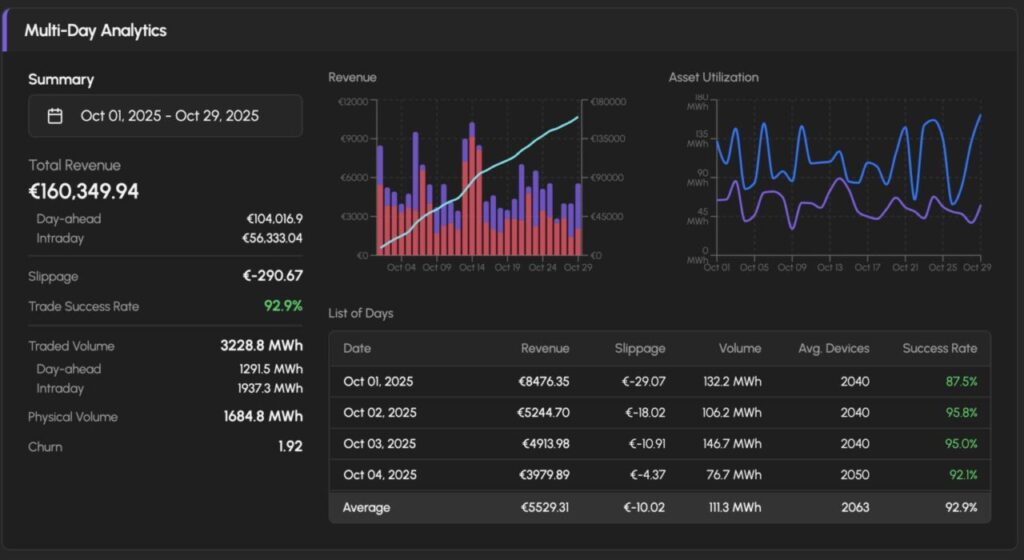
That logic is now expanding into a more sophisticated operational model. In mature markets such as Germany and parts of Southern Europe, residential batteries are increasingly integrated into aggregation platforms that combine thousands of distributed units into coordinated virtual energy resources. Instead of operating independently, these systems are now scheduled and dispatched collectively based on real-time grid conditions and market pricing signals.
This evolution changes the fundamental identity of residential storage. A home battery is no longer just an energy buffer. It is becoming a distributed node within a larger energy network, capable of contributing to grid balancing and participating indirectly in electricity markets through coordinated control systems.
The rise of aggregation platforms is the most important structural enabler behind residential battery participation in energy trading. These platforms act as coordination layers that translate grid requirements and market signals into dispatch instructions for distributed batteries.
Through this mechanism, residential storage systems can respond collectively to wholesale price fluctuations, frequency deviations, and demand response events. While individual batteries remain small in scale, their aggregated behavior creates a dispatchable resource comparable in function to traditional centralized power assets.
As participation increases, the nature of value creation is also changing. Early-stage residential storage economics were largely based on simple price arbitrage between peak and off-peak electricity periods. In more developed markets, this model is becoming less dominant. Value is now generated through a combination of real-time optimization, grid service participation, and coordinated flexibility provisioning.
This shift places greater emphasis on system responsiveness, communication speed, and integration quality rather than on storage capacity alone.
At the core of this transformation is the increasing penetration of renewable energy across Europe. Solar and wind generation introduce variability into power systems, creating frequent imbalances between supply and demand that cannot be efficiently managed through traditional centralized generation alone.
As a result, grid operators are progressively shifting toward distributed flexibility as a core operational strategy. Residential batteries play a central role in this transition because they can absorb excess renewable generation when supply is high and release stored energy when demand increases or grid frequency deviates.
When aggregated at scale, these systems form a distributed response network capable of stabilizing grid conditions within seconds. This capability is particularly important in modern electricity systems where variability is no longer an exception but a structural characteristic.
As residential storage penetration increases, the economic structure of battery operation is becoming more layered. The early model, which relied primarily on time-based electricity price differences, is gradually being replaced by a more dynamic framework in which batteries participate in multiple overlapping energy value streams.
In practice, this means that residential systems are increasingly being scheduled not only based on local consumption patterns but also on broader system signals such as wholesale market pricing, grid balancing needs, and aggregated demand response requirements. The same physical battery can therefore serve different economic functions depending on system conditions and platform-level optimization strategies.
This evolution introduces a new requirement for energy storage systems: they must be capable of high-frequency cycling, fast response times, and reliable performance under continuous dispatch conditions. Static or inflexible systems are less able to capture value in such an environment.
The changing role of residential batteries is directly influencing how they are engineered. Systems are no longer designed solely for occasional daily cycling, but for sustained participation in dynamic energy markets where charge and discharge events may occur multiple times per day.
Lithium iron phosphate chemistry has become widely adopted in this context due to its stability, safety profile, and long cycle life. These characteristics are essential for systems that are expected to operate continuously under grid-responsive conditions.
Manufacturers such as Pytes are aligning with this evolution by developing modular residential energy storage systems designed specifically for integration into distributed energy networks. Their approach emphasizes long-cycle durability, system scalability, and compatibility with mainstream energy management and inverter ecosystems.
Rather than functioning as standalone household appliances, these systems are increasingly engineered as grid-ready assets that can be deployed at scale and coordinated through aggregation platforms.
One of the most significant structural changes in Europe’s energy market is the reclassification of residential batteries from consumer products into infrastructure-like assets. This shift is driven by the increasing ability of storage systems to generate recurring revenue through participation in energy markets rather than solely reducing household electricity consumption.
In this emerging model, value is derived from multiple sources that operate simultaneously. Batteries can optimize energy usage based on time-of-use pricing while also participating in flexibility markets and grid balancing services through aggregation networks. In some regions, additional revenue streams are available through capacity-based compensation mechanisms tied to system reliability and grid support functions.
This creates a financial profile that resembles infrastructure investment more than traditional consumer equipment. Returns are no longer fixed or purely consumption-based but depend on operational performance, market integration quality, and dispatch optimization efficiency.
The increasing reliance on renewable energy sources is also reshaping how grid operators source flexibility. Instead of depending primarily on centralized generation assets or large-scale storage facilities, operators are progressively incorporating distributed resources into their operational frameworks.
This shift is driven by the need for faster response times, improved geographic distribution of balancing capacity, and reduced dependence on large infrastructure investments. Residential batteries, when aggregated, offer a highly responsive and scalable solution that aligns well with these requirements.
Their ability to respond to frequency deviations and demand fluctuations within seconds makes them particularly valuable in modern power systems where stability depends on rapid and decentralized adjustments.
Within this broader transformation, Pytes is positioning its energy storage systems around the requirements of distributed energy integration. The focus is not limited to energy capacity but extends to system behavior within coordinated energy networks.
Their modular storage architecture is designed to support flexible deployment scenarios while maintaining stable performance across high-cycle usage environments. Compatibility with hybrid inverter systems and energy management platforms further enables integration into aggregated energy ecosystems where residential batteries operate as coordinated resources rather than isolated units.
This approach reflects a broader industry shift in which residential storage systems are increasingly expected to function as networked infrastructure components rather than standalone household devices.
The trajectory of residential energy storage in Europe points toward a distributed energy architecture where homes act as active energy nodes, batteries function as dispatchable grid resources, and aggregation platforms coordinate system-wide flexibility. In this structure, the value of storage is no longer defined solely by installed capacity but by how effectively it can be integrated into a dynamic and interconnected energy ecosystem.
As this transition continues, residential batteries will play an increasingly central role in balancing renewable generation, stabilizing grid operations, and enabling new forms of energy market participation. The industry is moving toward a model in which energy systems are no longer centralized and linear but distributed, interactive, and continuously optimized.
Europe’s residential energy storage boom represents a fundamental shift in how electricity systems are structured and operated. Home batteries are evolving from passive backup solutions into active grid assets capable of participating in energy trading and flexibility services through aggregation platforms.
This transformation increases both opportunity and complexity. The value of residential storage is no longer determined solely by installation size but by system intelligence, integration capability, and operational responsiveness within distributed energy networks.
In this evolving landscape, companies such as Pytes are contributing to the infrastructure foundation of the energy transition by developing modular, grid-compatible storage systems designed for long-cycle performance and integration into large-scale distributed energy ecosystems.