Project Background La Antigua is a hillside residential community in Trujillo Alto, a municipality on Puerto Rico's northeastern coast. Like much of the island, the area sits on a grid that has been chronically unstable since Hurricane Maria devastated Puerto Rico's power infrastructure in 2017. Managed by LUMA Energy since 2021, the local grid in Trujillo Alto is prone to frequent rolling blackouts — sometimes two to three times per week — with outages that can last anywhere from a few hours to an entire night.
For residents, this is not a background inconvenience. Puerto Rico maintains an average year-round temperature of 27–29°C (80–85°F), with nighttime humidity that rarely drops below 80%. Without air conditioning, a home becomes genuinely difficult to live in within hours. Without power, the refrigerator stops, the coffee machine goes cold, the lights go out, and any kind of productive work becomes impossible. Electricity rates on the island — around $0.22–0.25/kWh, well above the U.S. mainland average — add a financial layer to the discomfort.
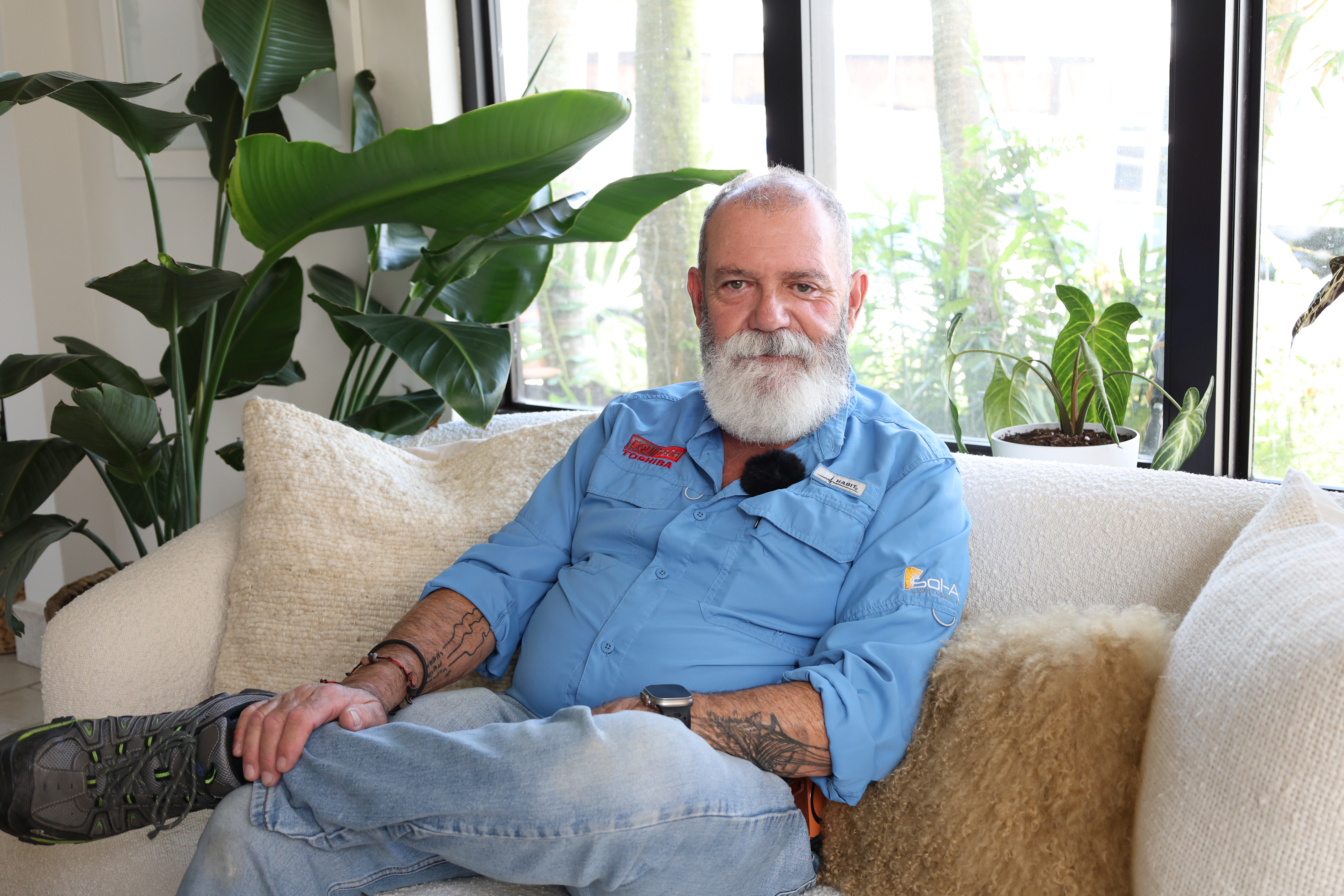
The homeowner in this case study is a professional solar installer who has spent years designing and commissioning energy systems for clients across Puerto Rico. For three years, his own home relied on sealed lead-acid batteries as a backup. He knew their limitations better than anyone. He'd hit the ceiling — literally — and it was time to upgrade.
Sealed lead-acid batteries are limited to approximately 50% usable depth of discharge (DoD). Push them deeper and their lifespan degrades rapidly. For a household running air conditioning, a full-size refrigerator, lights, a work studio, and everyday appliances, that 50% ceiling translated to just enough runtime for a short outage — and nothing in reserve when the grid stayed down longer.
The pattern in Trujillo Alto made the shortfall acute: outages hit most often at night, when solar generation is zero and the batteries are the only source of power. A system that ran out of usable energy at 2 AM wasn't a backup — it was a countdown timer. Beyond battery performance, the existing setup lacked any path to recharge from a generator. If the grid failed for days after a storm and cloud cover eliminated solar production, the batteries would eventually run flat with no recovery option until the sun returned.
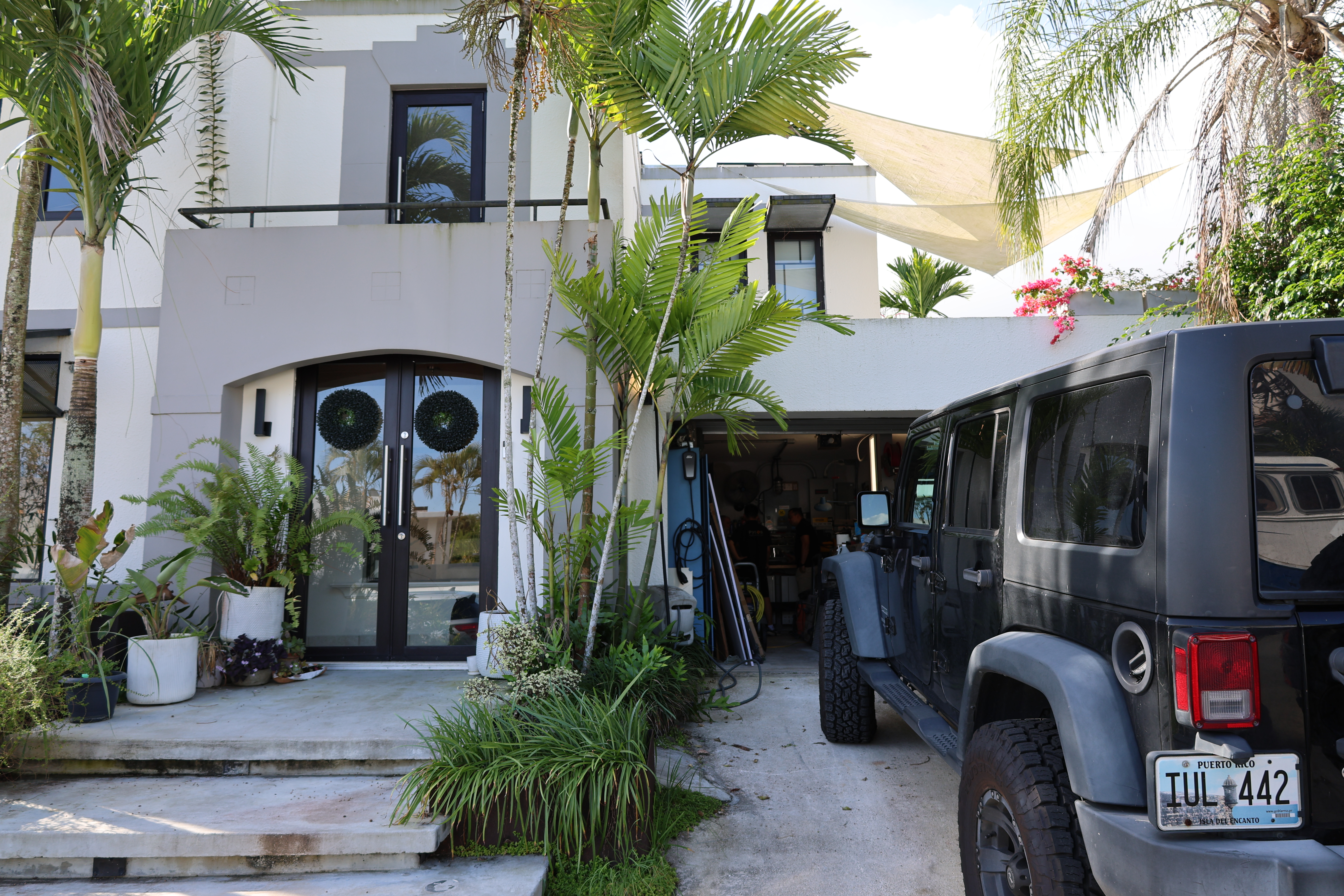
The Solution The homeowner designed and installed the new system himself, applying the same professional methodology he uses for client projects.
System Configuration:
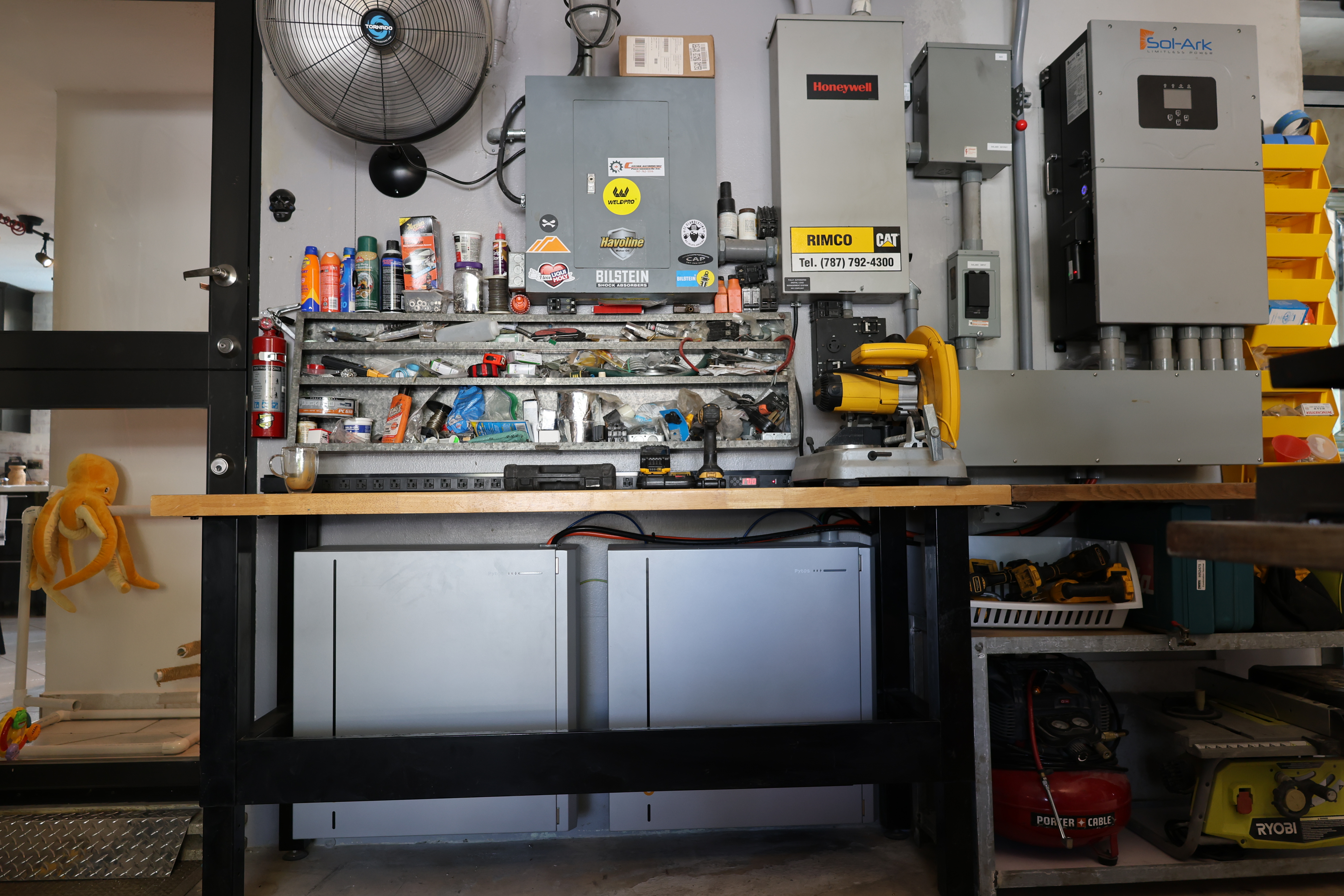
1)2 × Pytes V16 — 16 kWh per unit, 32 kWh total, LFP chemistry, 314 Ah @ 51.2V
2)Sol-Ark 15K — 15 kW All-in-One hybrid inverter
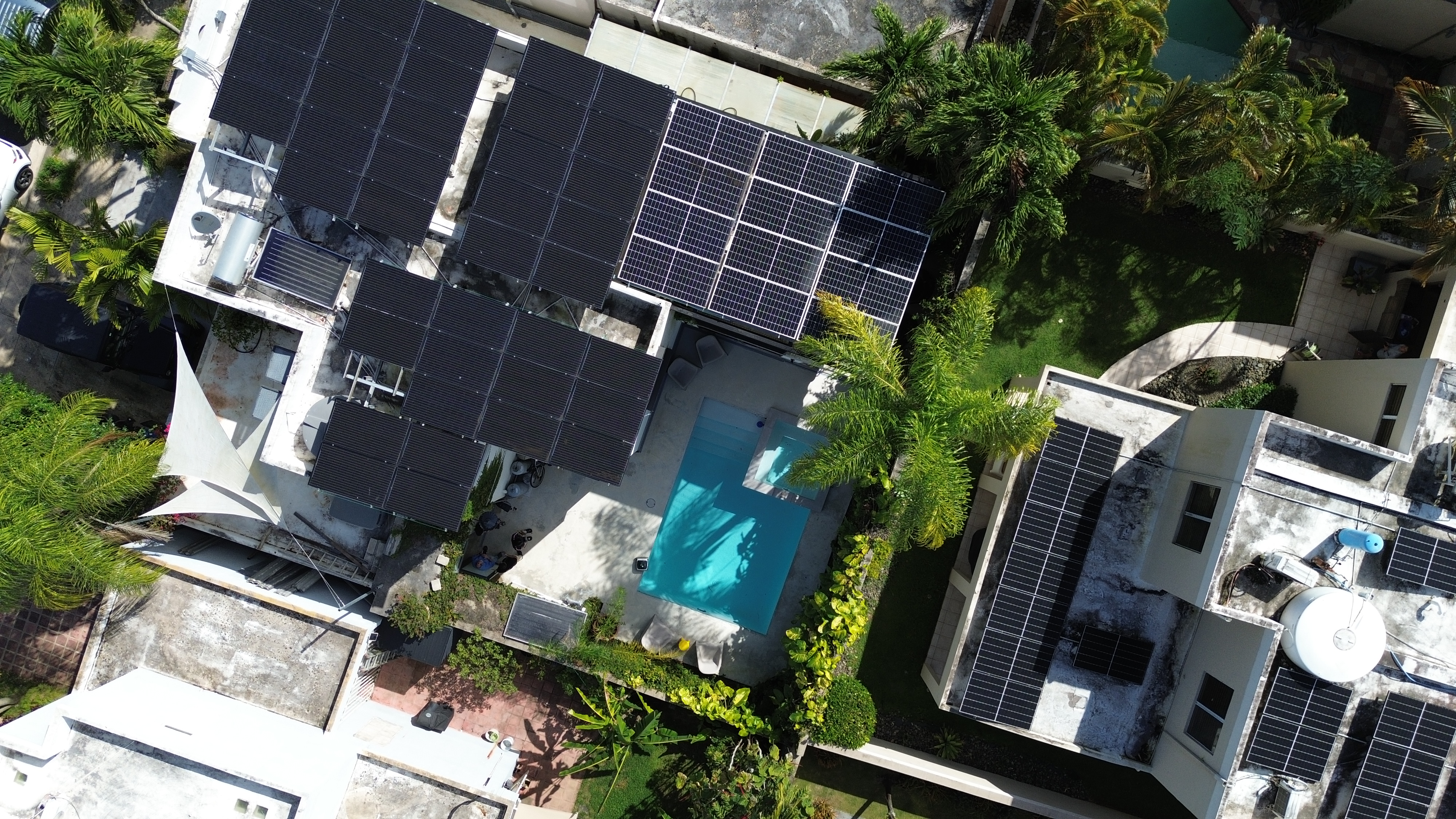
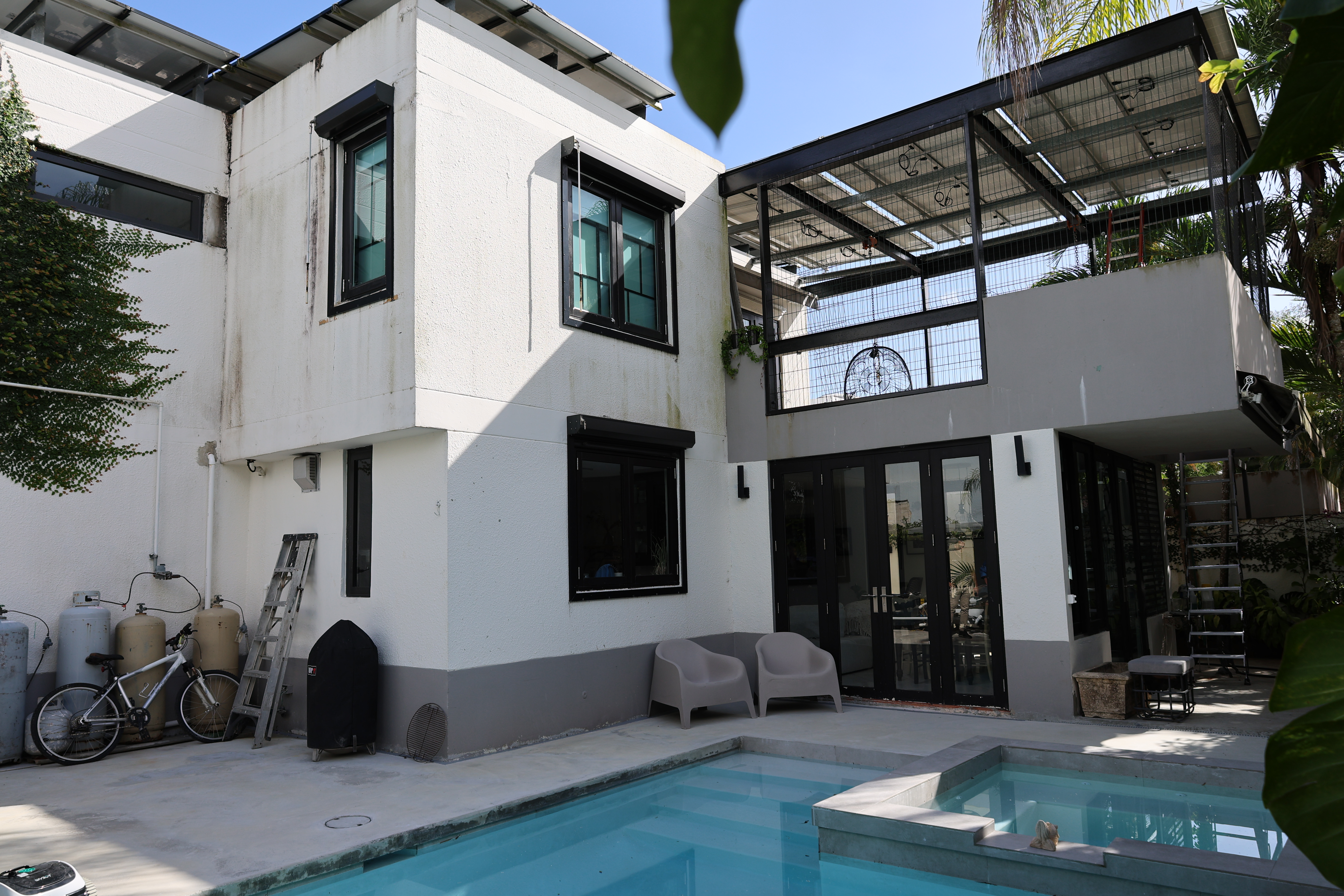
3)Rooftop solar PV array — primary generation source
4)17 kW generator — last-resort backup for extended outages
5)Grid-tied — self-consumption primary mode, surplus exported to grid The Sol-Ark 15K acts as the central energy hub. All power sources — solar PV (DC), utility grid (AC), and generator (AC) — feed into the inverter, which manages conversion, routing, and battery charging.
The Pytes V16 batteries sit on the DC bus, communicating directly with the inverter via closed-loop CAN/RS485 protocol. No energy source connects directly to the batteries; everything passes through the Sol-Ark. In day-to-day operation, solar charges the batteries and powers household loads in real time. Surplus generation exports to the LUMA grid, generating net metering credits.
When the grid fails, the system transitions to island mode instantly — no transfer delay, no interruption. The 17 kW generator provides a final safety net: if the grid stays down for days and solar production drops due to storm cloud cover, the generator feeds AC power into the Sol-Ark, which recharges the V16 batteries and keeps the household running indefinitely.
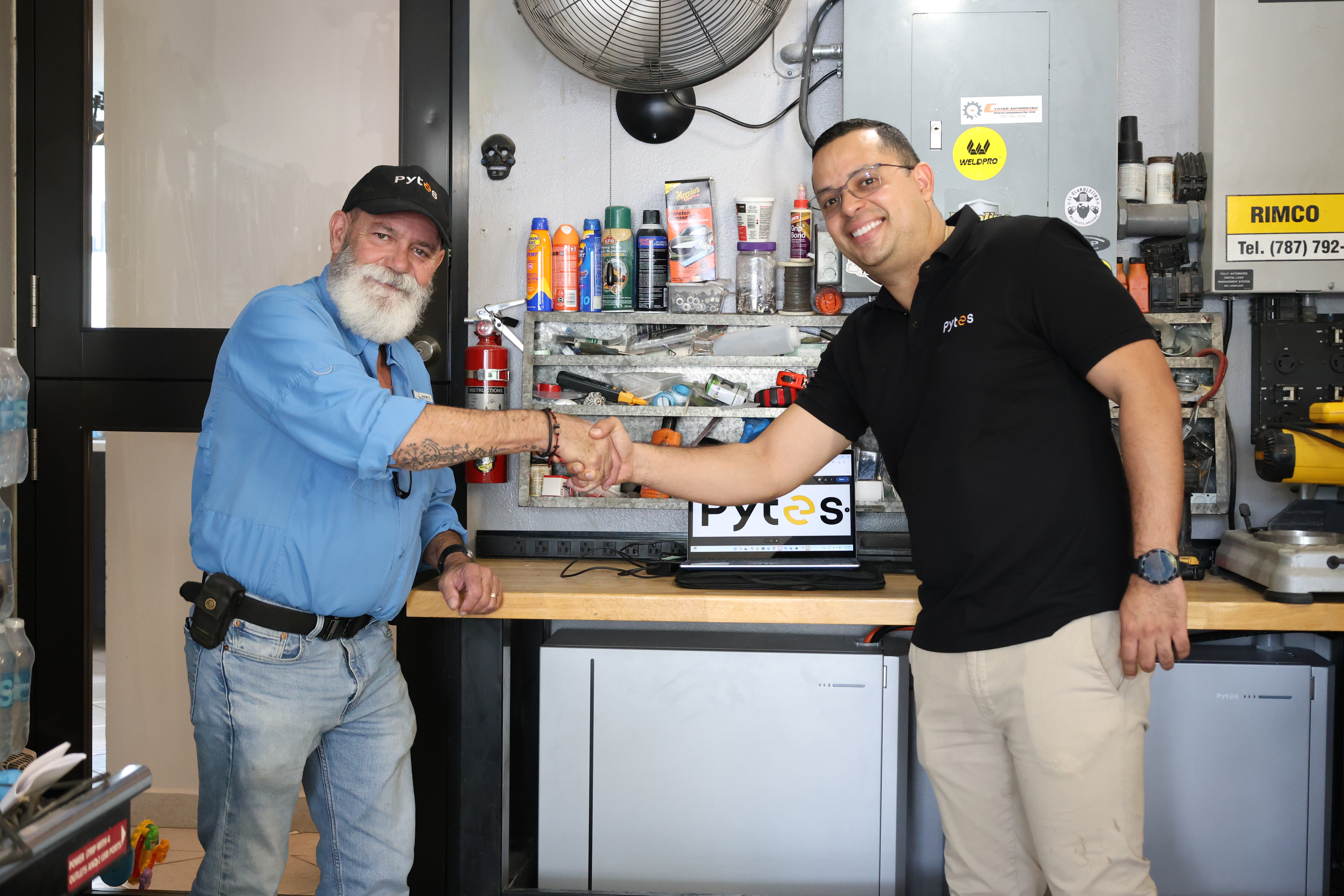
As a professional installer who evaluates equipment for client installations daily, the homeowner's decision was based on criteria that matter in the field — not just on a datasheet.
1)90% usable DoD vs. 50% on sealed batteries. Two V16 units at 32 kWh total deliver close to 29 kWh of real, usable energy. At a steady 3 kW household load, that translates to 10–13 hours of overnight backup — enough to carry the house comfortably through any typical outage and well into extended ones.
2)Generator charging — a capability most batteries lack. Many widely-sold battery brands cannot accept charge from a generator at all. Through the Sol-Ark's closed-loop integration, the V16 can be recharged via generator as an AC source. In Puerto Rico, where multi-day outages after tropical storms are not hypothetical but routine, this is the difference between a resilient system and one that eventually runs flat and waits.
3)Native closed-loop communication with Sol-Ark. The V16 communicates with the Sol-Ark 15K via CAN bus and RS485, providing real-time state of charge, temperature, and fault data. No external BMS adapter, no third-party controller, no manual configuration. True plug-and-play integration — important for an installer managing multiple installations and needing systems that commission cleanly and stay reliable.
4)IP66 weatherproofing and tropical-grade construction. The V16 carries an IP66 ingress protection rating, C4-M corrosion resistance, and a built-in aerosol fire suppression system — engineered for outdoor installation in environments where heat, humidity, and salt air are constant factors.
5)Local support presence in Puerto Rico. Pytes has sales and technical staff based on the island. When a question arises — on a client job or on his own system — the response comes from someone who can be on-site, not a mainland support ticket. That local backing is part of what makes recommending the product credible to clients.
The system powers the entire household continuously: 1)Air conditioning (running through the night) 2)Full-size refrigerator 3)Coffee machine 4)Bread maker 5)Full home lighting 6)Work studio 7)Small wine cellar 8)Television and entertainment
When the grid goes down in the neighborhood — which still happens two to three times a week — the house doesn't notice. The transition is seamless. The family sleeps through outages that affect everyone around them. The constant background anxiety of living under an unreliable grid is gone. Surplus solar generation during the day feeds back to the LUMA grid under net metering, offsetting electricity costs. The system is self-sufficient by design, with every contingency — grid failure, cloudy days, extended storms — covered by a layered energy strategy.
"The problem is good, as long as you have the support for it."— Installer & Homeowner, La Antigua, Trujillo Alto, Puerto Rico That quote captures the philosophy behind the choice.
No system is problem-free. What matters is how quickly problems get resolved. Pytes' local Puerto Rico presence, the V16's built-in WiFi monitoring, and the Sol-Ark's remote diagnostics via MySolArk mean that when something needs attention, it gets attention fast — for the homeowner and for every client he recommends the system to.
For installers commissioning their first V16 installation:
1)Plan the location before the battery arrives. At 130.5 kg / 280 lb per unit, repositioning after the fact is not practical. Confirm wall-mount vs. floor-mount, verify structural load capacity, plan cable routing, and ensure adequate airflow before the unit is on-site.
2)Use the right lifting equipment. Pytes manufactures a dedicated V16 Lifting Cart. If unavailable, any quality appliance lifter rated for the weight will work. Attempting to maneuver 280 lb into a wall-mount bracket by hand — especially in tight spaces or on uneven terrain — is a safety risk, not a shortcut.