The U.S. energy storage market is entering a new phase. Battery systems are no longer viewed only as backup power for homes or as large utility-scale assets. Increasingly, distributed battery energy storage is becoming part of the infrastructure used to manage grid constraints, reduce peak demand, improve energy resilience, and support commercial and industrial facilities.
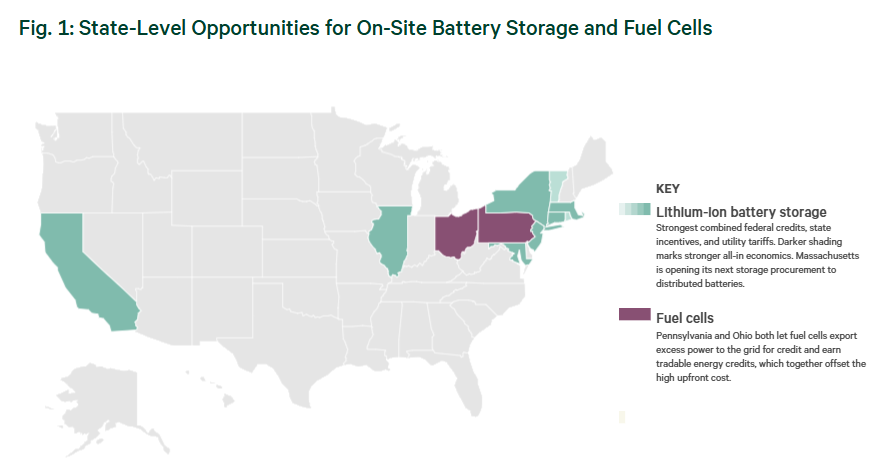
A recent CBRE Q3 2026 analysis highlights how state-level incentives and utility programs are creating new opportunities for distributed generation, particularly battery storage. Several U.S. markets are developing mechanisms that allow behind-the-meter (BTM) and distribution-connected batteries to generate additional value through demand response, capacity support, and grid reliability programs.
For battery manufacturers and energy storage solution providers, this shift changes the requirements for a storage system. The question is no longer simply how much energy a battery can store. System flexibility, installation efficiency, scalability, lifecycle performance, and compatibility with different applications are becoming equally important.
The growing role of distributed storage is closely connected to the increasing pressure on U.S. electricity infrastructure.
CBRE reports that New York's Con Edison has proposed a Reliability Asset Dispatch Rights program designed to address a projected 675 MW reliability gap. Under the proposed program, distribution-connected batteries could receive fixed payments over 15 years while receiving priority for interconnection. In exchange, participating systems would provide dispatch control and meet defined performance requirements.
Illinois is also developing a distributed storage tariff designed to compensate both behind-the-meter and grid-connected batteries during peak demand periods. The state's Clean and Reliable Grid Affordability Act established a minimum payment of $10/kW-year for qualifying distributed storage resources.
These developments illustrate a broader change in the economics of battery storage. A properly configured BESS can potentially serve several functions at the same time:
Peak load management can reduce exposure to demand charges. Demand response participation can create additional revenue opportunities. Backup capability can protect critical loads from outages. Solar-plus-storage configurations can increase the usable value of on-site renewable generation. Grid-support programs can create additional compensation for dispatchable battery capacity.
As these revenue streams develop, battery architecture must become more adaptable.
For commercial and industrial users, electricity reliability has a direct operational impact. Production lines, refrigeration systems, data processing equipment, HVAC systems, and other critical loads can be affected by outages, voltage disturbances, and peak electricity costs.
CBRE's broader distributed generation research describes on-site generation and storage as increasingly important infrastructure for facilities dealing with grid reliability challenges. Its analysis notes that on-site generation and storage can be deployed on substantially shorter timelines than some grid infrastructure upgrades.
This creates a practical use case for modular battery systems.
Instead of designing every project around a single large battery configuration, modular storage allows capacity to be adjusted according to the facility's actual load profile. A smaller installation may be sufficient for peak shaving or backup applications, while larger commercial facilities can expand storage capacity as electricity demand increases.
This is one reason modularity is becoming an important design consideration in the U.S. energy storage market.
The U.S. distributed storage market is not developing through one national model. State-level programs are creating different commercial opportunities.
California released a new demand response framework in July 2026 that would allow certain behind-the-meter batteries to earn resource adequacy credits for excess energy exported to the grid during peak demand periods, subject to approval. CBRE notes that the proposed change could increase the value of larger batteries installed at commercial and industrial facilities.
Connecticut's Energy Storage Solutions program provides demand response payments for distributed batteries that dispatch during peak demand periods. As of August 2026, CBRE reported that 31% of the program's available capacity remained.
Massachusetts is taking another approach. Up to 300 MW of distributed batteries can participate in its next transmission-scale procurement, expanding access to smaller storage systems as transmission constraints and permitting challenges affect larger projects. Selected projects can receive fixed payments through the Clean Peak Credit program.
The implication for storage suppliers is important: system design needs to accommodate different market structures rather than assuming that every project will operate under the same business model.
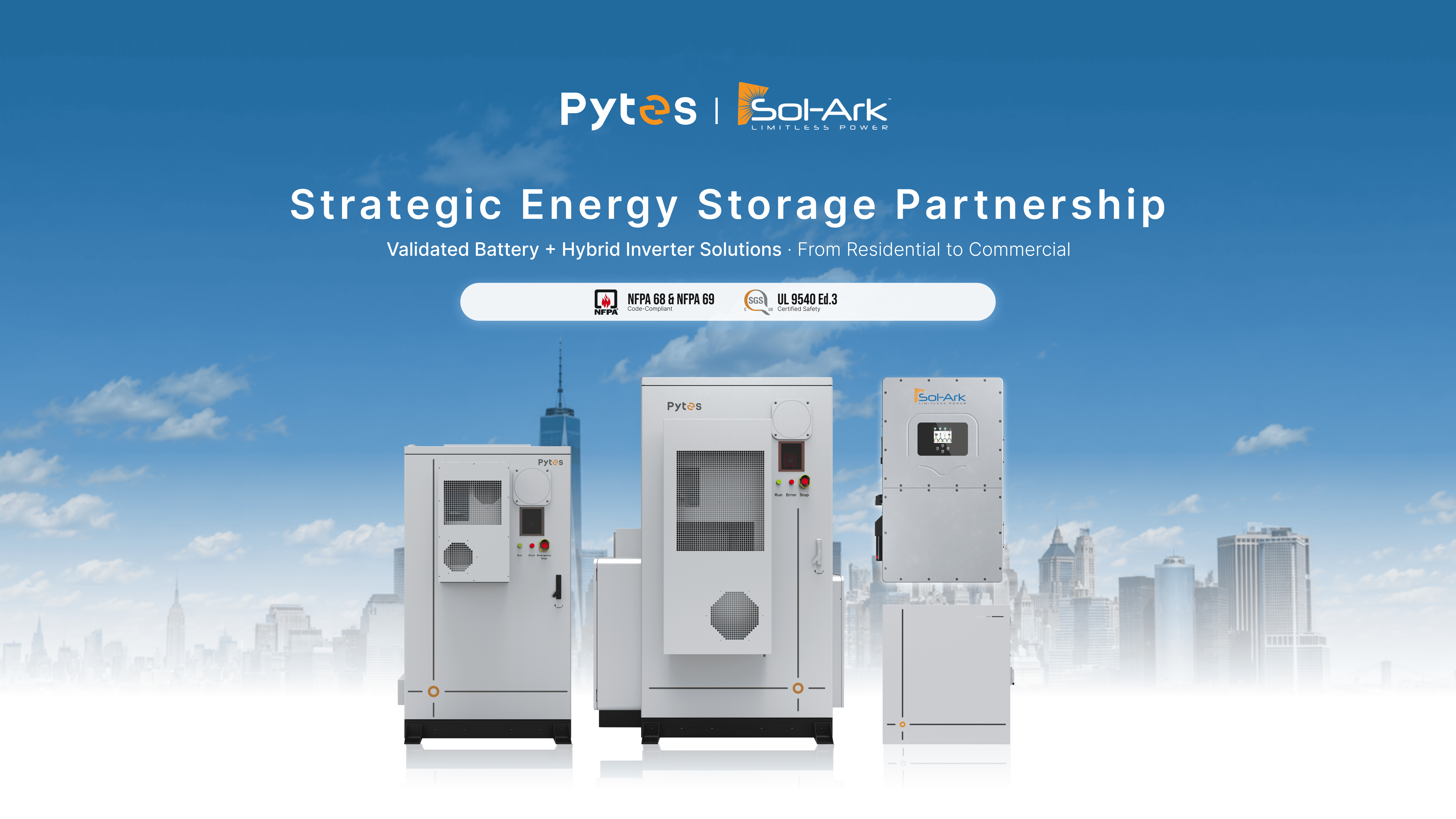
Against this changing market background, Pytes Energy focuses on energy storage solutions designed around the practical requirements of residential and commercial users.
Pytes has developed a product portfolio covering low-voltage server rack batteries, stackable modular battery systems, and high-voltage solutions. This product structure gives users different pathways for configuring energy storage according to available space, power requirements, system architecture, and future expansion needs.
For distributed storage, installation efficiency is particularly important. A battery system may need to fit into an existing utility room, garage, commercial facility, equipment room, or dedicated energy storage area. Modular architectures can simplify system configuration while allowing capacity to grow with demand.
Pytes' approach is therefore centered not only on battery capacity, but also on installation flexibility and system usability. Its solutions are designed to help households and businesses improve energy independence while integrating storage into broader energy management strategies.
As distributed batteries move into more sophisticated grid and commercial applications, several technical characteristics become increasingly relevant.
Scalability matters because electricity demand can change over the life of a facility. A modular battery system allows additional capacity to be integrated without completely redesigning the original installation.
System compatibility is equally important. Distributed storage frequently operates alongside solar PV, inverters, energy management systems, generators, or other electrical equipment. Battery architecture therefore needs to support reliable integration within the overall system.
Installation efficiency can directly affect project economics. Compact form factors, modular components, accessible interfaces, and practical installation procedures can reduce the complexity of deployment.
Safety and lifecycle performance become especially important when batteries are installed in occupied residential or commercial environments. Battery chemistry, thermal management, protection mechanisms, monitoring, and system-level controls all contribute to long-term operating reliability.
These considerations are becoming more significant as battery storage shifts from an optional backup technology to a component of energy infrastructure.
The U.S. distributed storage market is moving toward a multi-value model.
A battery installed behind the meter may initially be justified by backup power. As utility programs develop, the same asset could potentially participate in demand response or other grid-support mechanisms. When paired with solar, it can also shift renewable energy consumption toward higher-value periods.
That creates a different product requirement. Instead of optimizing a battery for one operating scenario, storage solutions increasingly need to provide flexibility across multiple use cases.
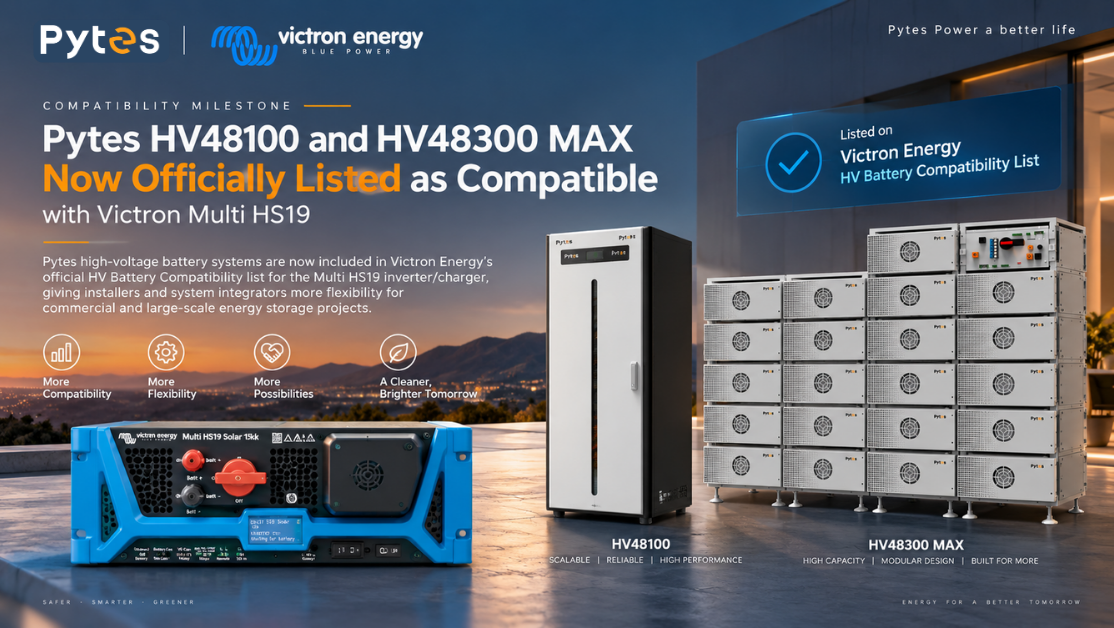
For Pytes, this market evolution reinforces the value of a broad product portfolio. Low-voltage rack batteries can address applications where standardized modular battery capacity is required, while stackable systems provide another approach for scalable residential and small commercial installations. High-voltage solutions can serve applications requiring a different system architecture and higher operating voltage.
The most important development may not be a single battery technology. It is the growing integration of batteries into the electricity market itself.
CBRE's Q3 2026 analysis shows that states are experimenting with new compensation structures, reliability programs, storage procurements, and demand response mechanisms. These programs are creating additional economic value for distributed batteries beyond conventional backup applications.
For the storage industry, this means the next generation of BESS projects will increasingly be evaluated according to several factors at once: available capacity, dispatch capability, installation timeline, system scalability, grid compatibility, operating environment, and the revenue opportunities available in the local electricity market.
As U.S. utilities and regulators continue to look for flexible resources that can respond to peak demand and local reliability constraints, distributed battery storage is becoming an increasingly important part of the energy infrastructure landscape.
Pytes Energy is positioned within this transition with a portfolio spanning low-voltage rack batteries, stackable modular systems, and high-voltage solutions. By focusing on scalable architectures, installation flexibility, and practical energy storage applications, Pytes aims to support households and businesses as energy storage moves from a backup solution toward a more integrated component of modern power systems.