The global energy landscape is undergoing a fundamental transformation. As renewable energy deployment continues to expand, battery energy storage systems (BESS) are becoming a critical technology for improving grid stability, maximizing solar utilization, and supporting energy independence.
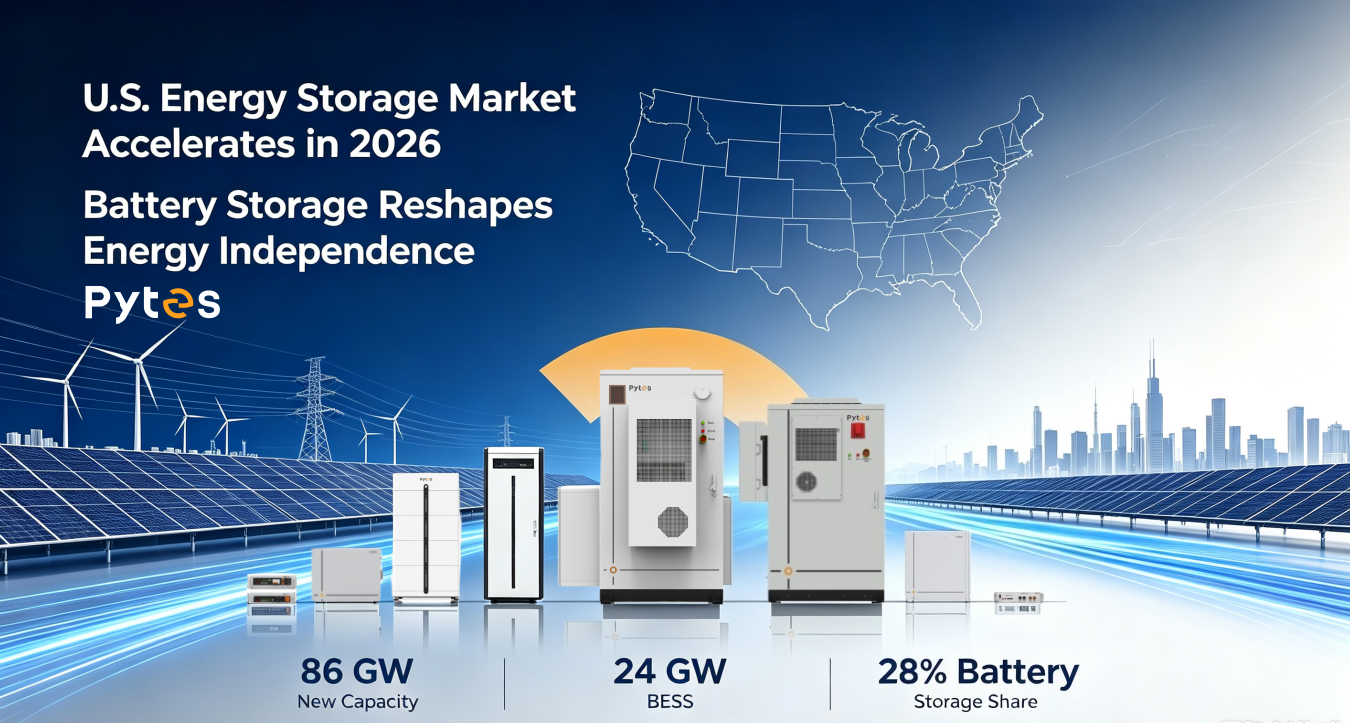
According to the latest analysis from the U.S. Energy Information Administration (EIA), developers in the United States plan to add 86 GW of new utility-scale electric generating capacity in 2026, marking a potential record year for new capacity additions. Battery storage is expected to account for 28% of these additions, with approximately 24 GW of utility-scale battery storage capacity planned for 2026.
This rapid expansion reflects a clear market shift: energy storage is no longer simply a backup solution. It is becoming an essential part of modern power infrastructure, enabling renewable energy integration, reducing grid pressure, and providing more flexible energy management.
For households, businesses, and industrial users, the question is no longer whether energy storage is needed, but how to select a reliable storage solution that can support long-term energy goals.
The rapid growth of solar and wind power has created new challenges for traditional electricity systems. Renewable energy generation depends heavily on weather conditions, creating fluctuations between electricity production and consumption.
Solar power is a typical example. During the daytime, solar systems may generate more electricity than needed, while demand often increases in the evening when solar production decreases. Battery storage solves this imbalance by storing excess energy and releasing it when electricity demand rises.
The EIA expects solar power to represent 51% of planned utility-scale capacity additions in the U.S. in 2026, while battery storage will become one of the fastest-growing supporting technologies.
This trend demonstrates that future energy systems will increasingly rely on the combination of renewable generation and intelligent storage rather than generation alone.
As energy demands become more complex, storage systems must provide more than basic charging and discharging functions.
Modern users require solutions that can adapt to different scenarios:
· Residential solar energy storage
· Backup power during grid outages
· Commercial peak shaving
· Industrial energy management
· Microgrid applications
Different applications require different battery architectures. A small residential system may prioritize compact installation and simple expansion, while commercial and industrial projects require higher capacity, stronger safety features, and scalable configurations.
This is why modular battery design has become an important direction in the energy storage industry.
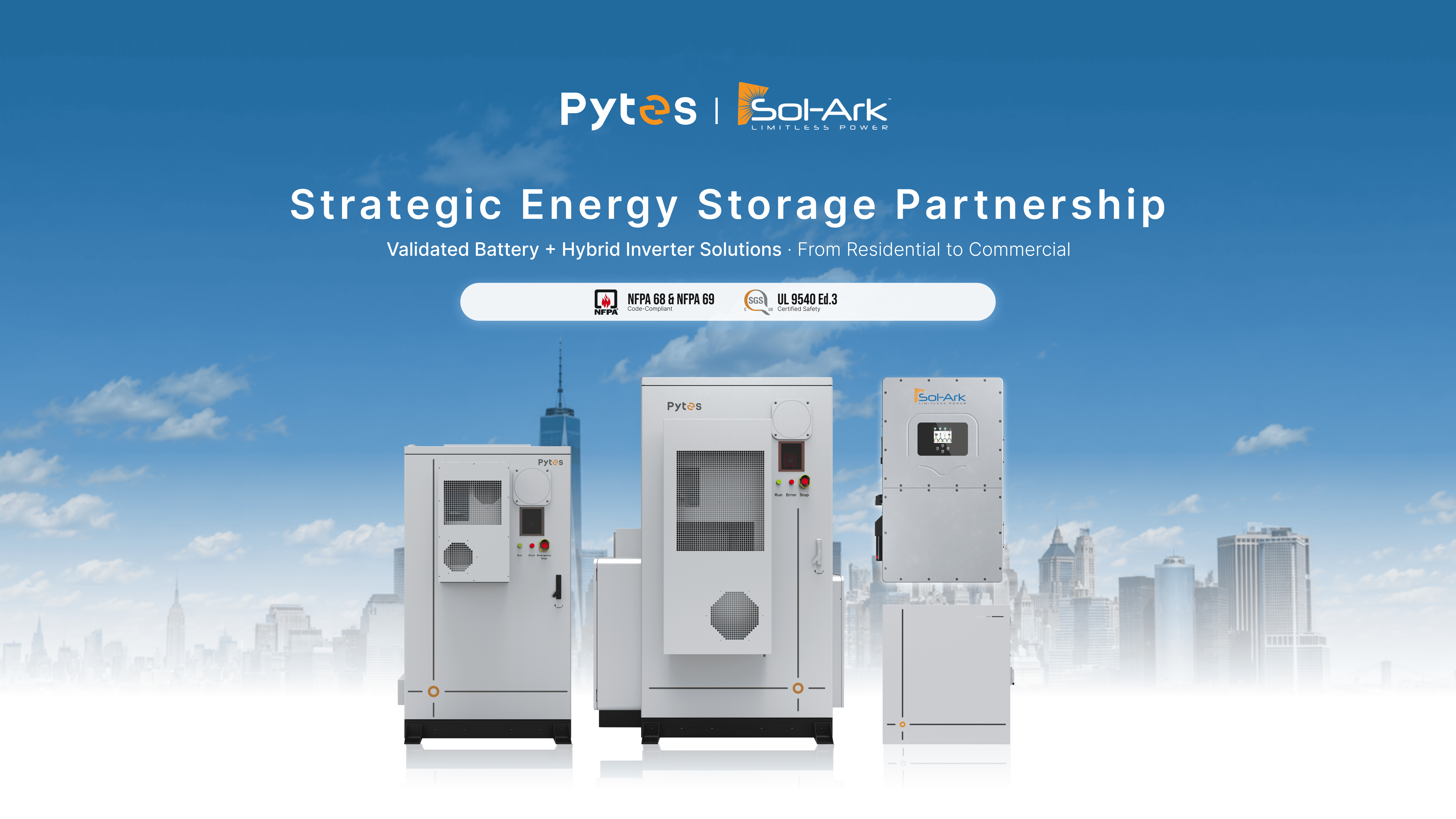
As the energy storage market continues expanding, Pytes Energy has developed a comprehensive product ecosystem designed to meet the diverse requirements of residential, commercial, and industrial users.
Pytes has become a trusted brand in the energy storage sector by focusing on reliable battery technology, flexible system architecture, and user-friendly installation experiences. Its solutions include low-voltage server rack batteries, stackable modular systems, and high-voltage (HV) solutions, allowing customers to select the appropriate configuration based on their energy requirements.
Rather than offering a single battery solution, Pytes focuses on creating scalable energy platforms that can grow with future energy needs.
For example, modular systems allow users to start with an initial capacity and expand storage capability as electricity consumption increases. This approach reduces initial investment pressure while providing long-term flexibility.
With the rapid deployment of battery storage projects, safety has become one of the most important considerations in the industry.
A reliable energy storage system requires:
· Stable battery chemistry
· Advanced battery management systems (BMS)
· Thermal management capability
· Multiple layers of protection
· Long lifecycle performance
Lithium iron phosphate (LFP) battery technology has become increasingly popular in stationary storage applications because of its strong thermal stability, long cycle life, and safety advantages.
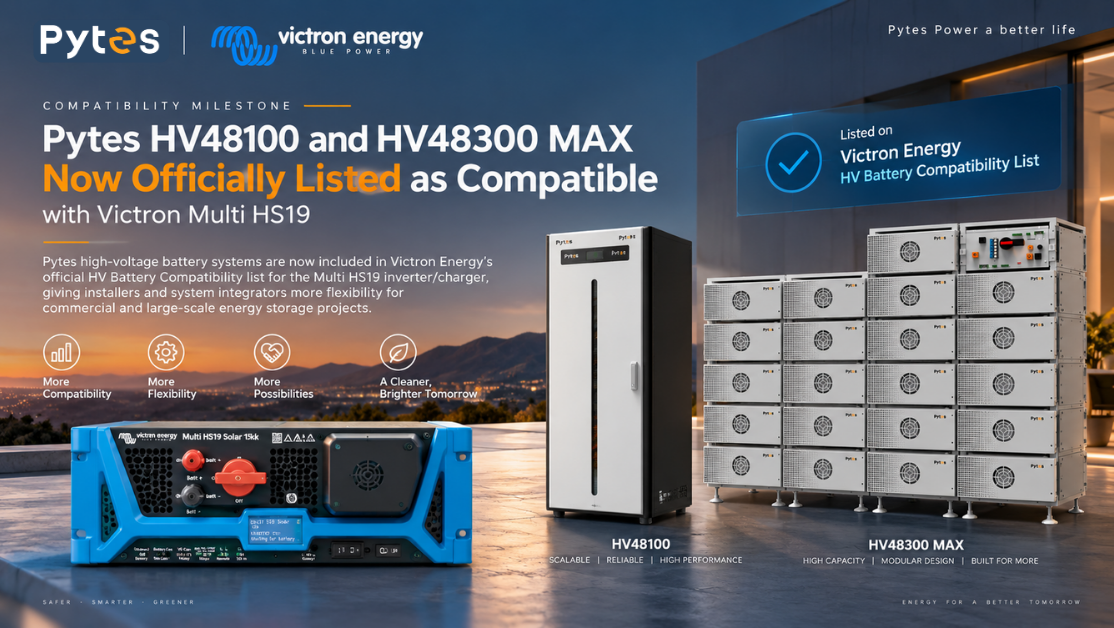
Pytes integrates LFP battery technology across its energy storage solutions, focusing on stable performance and long-term reliability. Its high-voltage battery series, such as HV solutions, are designed for residential, commercial, industrial, and photovoltaic storage applications, offering scalable configurations and intelligent management capabilities.
Energy independence is becoming an important goal for many users.
For homeowners, battery storage can increase solar self-consumption, provide backup power during outages, and reduce dependence on grid electricity.
For businesses, storage systems can help manage electricity costs by reducing peak demand and improving renewable energy utilization.
Pytes solutions are designed to support these needs through different product categories:
Low-voltage server rack batteries provide a flexible option for residential backup and smaller energy systems.
Stackable modular batteries offer convenient expansion capabilities for growing energy demands.
High-voltage solutions provide higher-performance options for commercial and industrial applications requiring larger energy capacity.
This multi-scenario product strategy allows energy storage systems to better match different installation environments and customer requirements.
The U.S. energy market is entering a new stage where storage will play a central role in electricity management. As renewable energy capacity continues increasing, battery systems will become increasingly important for balancing supply and demand.
However, future energy storage success will depend not only on battery capacity but also on system reliability, installation flexibility, safety design, and intelligent management.
Companies like Pytes Energy are responding to this industry transformation by developing storage solutions that combine advanced battery technology with practical application needs. Through modular designs, scalable architectures, and reliable performance, Pytes helps households and businesses move toward a more resilient and sustainable energy future.
The rapid growth of battery storage in the United States marks a major milestone in the global energy transition. With billions of dollars being invested in renewable infrastructure, storage systems are becoming the bridge between clean energy generation and reliable electricity supply.
For users seeking energy independence, the future belongs to storage solutions that are safe, scalable, and adaptable.
By providing low-voltage, modular, and high-voltage energy storage options, Pytes Energy continues to support the evolving needs of modern energy systems and empower more homes and businesses to achieve a smarter, cleaner, and more sustainable energy future.