As residential solar systems become more common, homeowners are paying closer attention to battery performance rather than simply battery capacity. Fast charging, stable power output, long service life, and easy system expansion have become key considerations when selecting an energy storage solution.
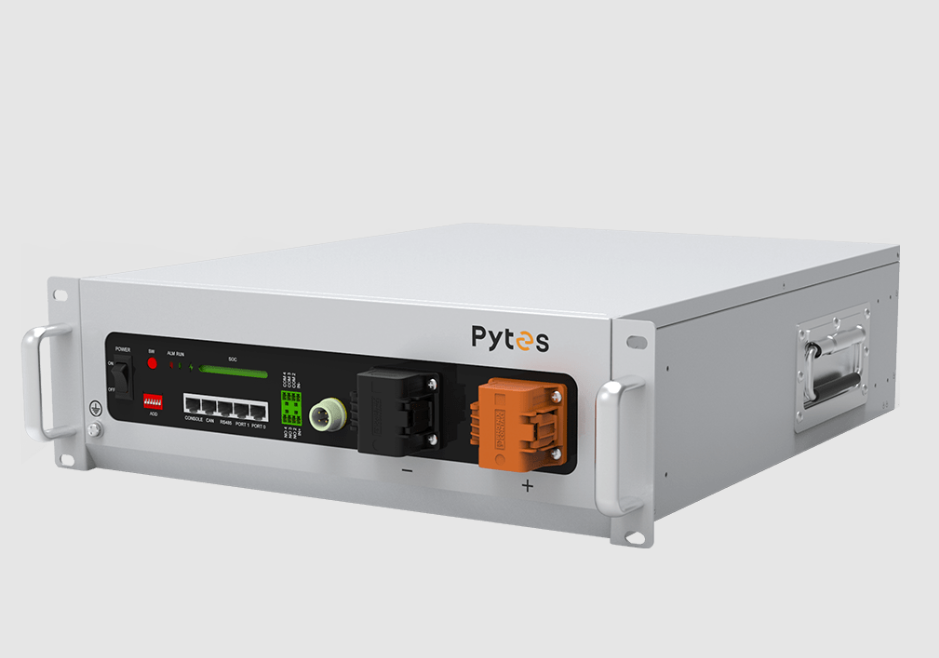
The Pytes V5 is designed around these practical needs. Equipped with a 51.2V nominal voltage, 100Ah capacity, and 5.12kWh nominal energy, this rack-mounted LiFePO₄ battery combines high power capability with long-term reliability. Whether supporting daily solar self-consumption, providing backup power during outages, or serving small commercial and off-grid applications, the V5 offers performance backed by measurable specifications rather than marketing claims.
For most residential energy storage systems, battery capacity determines how much electricity generated during the day can be used after sunset. With a 51.2V operating platform and 100Ah battery capacity, the Pytes V5 stores 5.12kWh of energy, providing sufficient reserve power for essential household loads such as lighting, refrigeration, networking equipment, security systems, and communication devices.
The battery operates across a 47.5V to 57.6V voltage range, making it compatible with a wide variety of 48V hybrid inverter systems. This standardized architecture simplifies installation while allowing the battery to integrate smoothly into existing residential solar systems.
Power capability is just as important as energy capacity. A battery may store enough electricity, but if it cannot deliver sufficient current, high-power appliances may struggle during startup.
The Pytes V5 supports a maximum continuous charge and discharge current of 100A, with a recommended operating current of 75A. During short-duration peak demand, it can supply 120A for three minutes and up to 180A for 15 seconds. These specifications allow the battery to respond quickly when multiple appliances operate simultaneously, while also accepting high solar charging currents during periods of strong sunlight.
Compared with batteries limited to lower charge and discharge rates, the V5 enables homeowners to capture more available solar energy within a shorter charging window and maintain stable power delivery during temporary load spikes.
Battery lifespan directly affects the total cost of ownership. Instead of focusing only on warranty periods, users increasingly evaluate cycle life because residential batteries often complete one full charge-discharge cycle every day.
The Pytes V5 uses Lithium Iron Phosphate (LiFePO₄) cells and is rated for more than 6,000 cycles under standard operating conditions. Combined with a design life exceeding 10 years, this durability helps reduce replacement frequency and lowers lifetime energy storage costs. LFP chemistry also provides excellent thermal stability, making it one of the safest battery technologies available for stationary energy storage applications.
Energy demand rarely remains constant. After installing electric vehicle chargers, heat pumps, or additional solar panels, many homeowners require larger battery capacity than originally planned.
Rather than replacing the entire system, the Pytes V5 allows gradual expansion. Up to 16 batteries can operate in parallel, and with the addition of a Hub, the system can support six parallel groups, providing a maximum storage capacity of approximately 491.52kWh. This modular architecture enables users to begin with a single battery and expand only when future electricity consumption requires additional storage.
Every percentage point of battery efficiency influences the overall performance of a photovoltaic system. The Pytes V5 delivers round-trip efficiency of at least 95%, allowing more of the electricity generated by rooftop solar panels to be stored and reused instead of being lost during energy conversion.
Higher efficiency improves solar self-consumption, reduces dependence on grid electricity, and increases the long-term return on investment for residential energy systems. For homeowners seeking greater energy independence, this efficiency translates directly into better utilization of every kilowatt-hour produced by their solar array.
Residential batteries are often installed in garages, utility rooms, agricultural buildings, or outdoor equipment enclosures where ambient temperatures fluctuate throughout the year.
The Pytes V5 is designed to operate under a wide range of conditions, supporting charging temperatures from 0°C to 45°C and discharging temperatures from −10°C to 50°C. An optional self-heating function can increase battery temperature by approximately 10°C per hour, helping maintain reliable performance in colder climates and extending seasonal usability.
A modern energy storage system must communicate efficiently with inverters and monitoring platforms. The Pytes V5 supports CAN, RS485, RS232, optional Wi-Fi, and Dry Contact communication interfaces, enabling compatibility with numerous hybrid inverter brands and energy management systems.
This flexible communication capability allows installers to configure systems more easily while giving homeowners convenient access to battery operating data and system status.
Performance specifications alone are not enough for residential energy storage. Independent safety certifications provide additional confidence for installers, distributors, and end users.
The Pytes V5 has obtained certifications including UL 1973, UL 9540, UL 9540A, IEC 62619, UN38.3, CEC, and SGIP, demonstrating compliance with internationally recognized standards covering battery safety, transportation, and stationary energy storage applications.
The Pytes V5 combines 51.2V nominal voltage, 100Ah capacity, 5.12kWh energy storage, 100A continuous output, more than 6,000 cycles, and ≥95% round-trip efficiency into a compact rack-mounted battery designed for modern residential energy systems. Instead of relying on broad performance claims, its measurable specifications demonstrate why it is suitable for solar self-consumption, backup power, off-grid installations, and scalable home energy storage projects.
As homeowners continue investing in renewable energy and energy independence, batteries that combine proven LiFePO₄ technology with high efficiency, flexible expansion, and long service life will remain a practical choice for both current and future energy needs.