Residential energy storage systems are moving toward higher capacity, stronger safety protection, and easier outdoor installation. Many traditional low-capacity battery systems struggle to support modern household loads, while indoor-only designs increase installation limitations and project complexity.
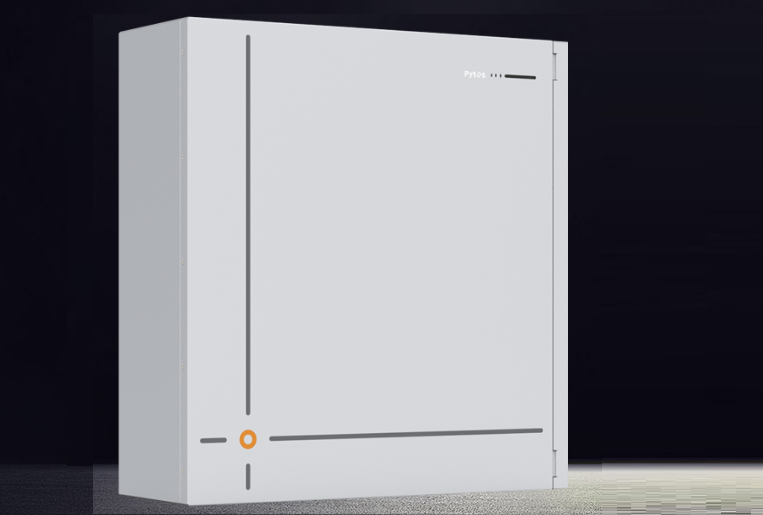
Pytes Energy’s V16 outdoor wall-mounted battery is designed to solve these challenges with a fully integrated high-capacity ESS platform built for residential and light commercial applications.
The V16 combines 16.07kWh energy capacity, 10.24kW output power, IP66 outdoor protection, and integrated safety functions in a single system. This combination allows installers and energy users to deploy more flexible and reliable storage solutions while reducing installation complexity.
As home electricity demand continues increasing, energy storage systems must support larger loads and longer backup duration.
The Pytes V16 delivers 16.07kWh nominal energy with 314Ah capacity and 51.2V nominal voltage. The system supports up to 200A discharge current and provides 10.24kW maximum output power.
This level of performance allows the battery to support high-load household equipment including HVAC systems, refrigerators, water pumps, electric cooking appliances, and EV charging systems.
Compared with smaller 5kWh or 10kWh battery systems, a single V16 can reduce the number of battery modules required for whole-home backup projects. Fewer modules also help simplify system wiring and installation layout.
Outdoor deployment capability has become increasingly important in residential ESS projects, especially in regions where indoor installation space is limited.
The V16 uses an IP66-rated enclosure with C4-M corrosion resistance, allowing stable operation in harsh outdoor environments including heavy rain, dust exposure, coastal humidity, and high-temperature conditions.
Unlike indoor-only battery systems that require additional cabinets or protective structures, the V16 is engineered specifically for outdoor installation. This reduces both installation cost and deployment complexity.
The system also integrates a heating film that supports operation in temperatures as low as -20°C. The self-heating function helps maintain charging and discharge performance in cold-weather environments where low temperatures often reduce lithium battery efficiency.
Safety is becoming one of the most important factors in residential ESS deployment.
The V16 integrates several protection functions directly inside the battery system, including aerosol fire suppression, an integrated DC breaker, emergency shutdown capability, and a pre-charge circuit.
This integrated architecture reduces the need for additional external safety accessories while simplifying overall system configuration.
The battery also complies with multiple international standards including UL9540, UL9540A, UL1973, IEC62619, and CE certification requirements. These certifications are increasingly important in residential ESS projects where safety compliance directly affects project approval and long-term operational reliability.
Battery lifecycle directly affects total ownership cost.
The Pytes V16 is designed for up to 8000 cycles and includes a 10-year warranty, helping reduce replacement frequency and improve long-term return on investment.
The system uses automotive-grade LFP cells that provide stronger thermal stability, longer service life, and lower thermal runaway risk compared with traditional lithium battery chemistries.
LFP technology has become one of the preferred solutions for residential and commercial ESS because of its balance between safety, durability, and operational reliability.
Energy demand often increases over time as homeowners add solar systems, EV charging infrastructure, or additional backup circuits.
The V16 supports parallel expansion up to 16 units, allowing total system capacity to scale up to 256kWh without requiring an additional hub device.
This scalability makes the platform suitable for residential backup systems, off-grid homes, agricultural projects, and light commercial energy applications.
Using a standardized scalable battery platform also simplifies future system upgrades and maintenance management.
The V16 supports RS485, CAN, WiFi, and dry contact communication protocols, allowing compatibility with multiple mainstream inverter brands.
Stable communication capability improves monitoring accuracy, commissioning efficiency, and long-term system reliability.
For installers, broader inverter compatibility reduces integration difficulty and helps simplify project deployment across different ESS configurations.
As the residential ESS market continues growing, installation labor cost is becoming a larger portion of total project expense.
The V16 supports both wall-mounted and floor-mounted installation while using plug-and-play connectors to simplify deployment.
Compared with multi-module battery systems requiring extensive external wiring and additional protection devices, the integrated V16 design helps reduce installation time, wiring complexity, and potential installation errors.
This installer-friendly architecture becomes increasingly valuable as energy storage adoption expands into mainstream residential markets.
Residential energy storage is evolving beyond simple emergency backup systems. Modern users increasingly expect ESS platforms to support solar self-consumption, whole-home backup, peak electricity cost reduction, and long-term energy independence.
The Pytes V16 reflects this industry transition through its combination of high-capacity storage, outdoor adaptability, integrated safety protection, and scalable architecture.
As distributed energy systems continue expanding globally, high-power outdoor-ready battery platforms like the V16 are becoming an increasingly important part of modern residential energy infrastructure.