The global energy storage industry is no longer evolving under the same assumptions that defined its early growth phase. What once relied heavily on policy-driven arbitrage models is now being reshaped by market-based electricity pricing, grid flexibility requirements, and increasingly complex consumption patterns from industrial and digital infrastructure.
A recent policy shift in China—highlighted in financial news reporting from early 2026—has accelerated this transformation. Several provinces are gradually removing fixed peak-valley electricity pricing mechanisms, replacing them with more market-responsive pricing structures. Instead of administratively defined tariffs, electricity prices are increasingly determined by real-time supply and demand conditions.
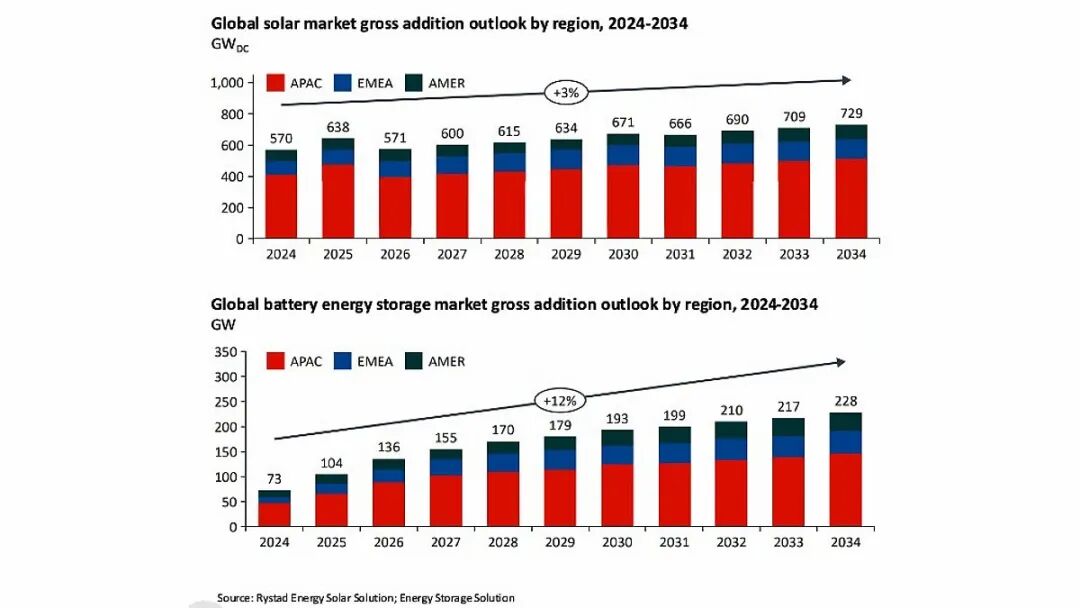
This change may appear subtle at first glance, but its implications for energy storage systems (ESS) are structural. It directly challenges the traditional business model where storage systems generate returns primarily through predictable energy arbitrage: charging at low night tariffs and discharging during fixed peak periods.
In this new environment, companies like Pytes, which focus on residential and commercial energy storage systems, are operating in a fundamentally different competitive landscape—one where system intelligence, lifecycle performance, and operational flexibility matter more than static price spreads.
For years, the core logic behind distributed energy storage investment was relatively straightforward. Electricity prices were structured in stable peak and off-peak bands, and the value proposition of a battery system could be calculated with reasonable certainty.
That stability is now eroding.
With the removal or weakening of fixed peak-valley pricing, electricity prices are becoming increasingly volatile and time-sensitive. Instead of two or three clearly defined price levels per day, users are now exposed to fluctuating tariffs that reflect grid load conditions, renewable generation variability, and regional demand spikes.
This shift fundamentally changes storage economics. The revenue model is no longer a simple spread between peak and off-peak prices. Instead, it becomes a dynamic optimization problem involving multiple variables: real-time pricing, load forecasting, demand response participation, and degradation-aware dispatch strategies.
Under these conditions, energy storage systems must evolve from passive arbitrage tools into active energy management assets.
Within this evolving landscape, Pytes is positioning itself around a clear technical and product philosophy: energy storage systems must deliver predictable performance in unpredictable market environments.
Rather than relying solely on external price structures, Pytes’ system approach emphasizes internal controllability and stability. This includes battery architecture designed for long cycle life, integrated battery management systems that prioritize operational safety, and system-level configurations optimized for both residential and commercial use cases.
At pytesusa.com, the company’s product direction reflects a broader industry transition toward integrated energy solutions rather than standalone hardware components. The focus is increasingly on system reliability, lifecycle efficiency, and adaptability to multiple revenue scenarios.
In practical terms, this means energy storage systems are no longer evaluated only by capacity or upfront cost. Instead, they are assessed based on how consistently they can generate usable economic value over time, even as external pricing conditions fluctuate.
One of the most important consequences of market-based electricity pricing is the expansion of storage use cases.
Peak shaving and load shifting remain relevant, but they are no longer sufficient as standalone value drivers. Instead, storage systems are increasingly being integrated into broader energy intelligence frameworks that include demand response, backup power assurance, and real-time energy optimization.
In commercial and industrial environments, this shift is particularly visible. Facilities are no longer designing storage systems simply to reduce electricity bills under fixed tariffs. They are designing systems to actively manage exposure to volatility.
For example, a commercial facility with variable production loads may now use storage not only to reduce peak demand charges but also to stabilize operational energy costs under fluctuating tariffs. In this context, storage becomes a buffer against uncertainty rather than a tool for predictable savings.
This is where system-level design becomes critical. Pytes’ emphasis on modular storage systems and integrated control logic aligns with this shift toward operational flexibility rather than static optimization.
In a stable pricing environment, minor inefficiencies in system performance could be tolerated because revenue projections were relatively predictable. In a dynamic pricing environment, however, system reliability becomes a core economic variable.
Battery degradation, efficiency losses, and response latency directly affect the ability to capture short-term price opportunities. A system that cannot respond quickly or consistently loses value in real time.
This is why lifecycle performance has become a central metric in modern storage evaluation. It is no longer sufficient to calculate payback periods based on idealized cycles. Instead, operators must consider how system performance evolves under continuous operation, variable load conditions, and frequent dispatch events.
Pytes’ product direction reflects this shift by focusing on long-cycle stability and consistent discharge performance across diverse operating conditions. The goal is not only to store energy efficiently, but to ensure that stored energy can be reliably deployed when economic conditions are most favorable.
While large-scale grid storage continues to expand, distributed energy storage is gaining strategic importance in parallel.
Residential and small commercial systems are increasingly exposed to real-time electricity pricing and localized grid constraints. This creates a new demand profile where storage systems must balance self-consumption optimization, backup reliability, and participation in emerging energy markets.
In this segment, system simplicity and reliability become as important as technical performance. Users are less concerned with engineering specifications and more focused on consistent outcomes: lower bills, stable backup power, and minimal operational complexity.
Pytes’ residential storage solutions align with this trend by prioritizing system integration and user-side energy management. Instead of requiring complex configuration, these systems are designed to operate as adaptive energy assets that respond automatically to consumption patterns and grid signals.
The broader implication of these changes is that the energy storage industry is moving from a capacity-driven market to a value-driven market.
Capacity alone no longer guarantees returns. Instead, value creation depends on how effectively a system can interact with real-time electricity markets, manage degradation, and optimize dispatch strategies.
This transition has several structural consequences. Competition is shifting from hardware specifications to system intelligence. Software and control algorithms are becoming as important as battery chemistry. And long-term operational performance is becoming the dominant factor in investment decisions.
In this context, companies that can integrate hardware reliability with system-level optimization capabilities are better positioned to succeed.
The policy changes highlighted in recent financial reports are not isolated regulatory adjustments. They are part of a broader global transition toward market-based electricity systems.
As fixed pricing mechanisms weaken, energy storage is no longer just a tool for exploiting predictable price differences. It is becoming an active participant in real-time energy economics.
Companies like Pytes are adapting to this shift by focusing on system stability, lifecycle performance, and integrated energy management rather than isolated hardware metrics.
The industry is moving toward a new definition of value—one where energy storage systems are evaluated not by how much energy they store, but by how intelligently and reliably they convert that energy into economic and operational advantage under continuously changing conditions.