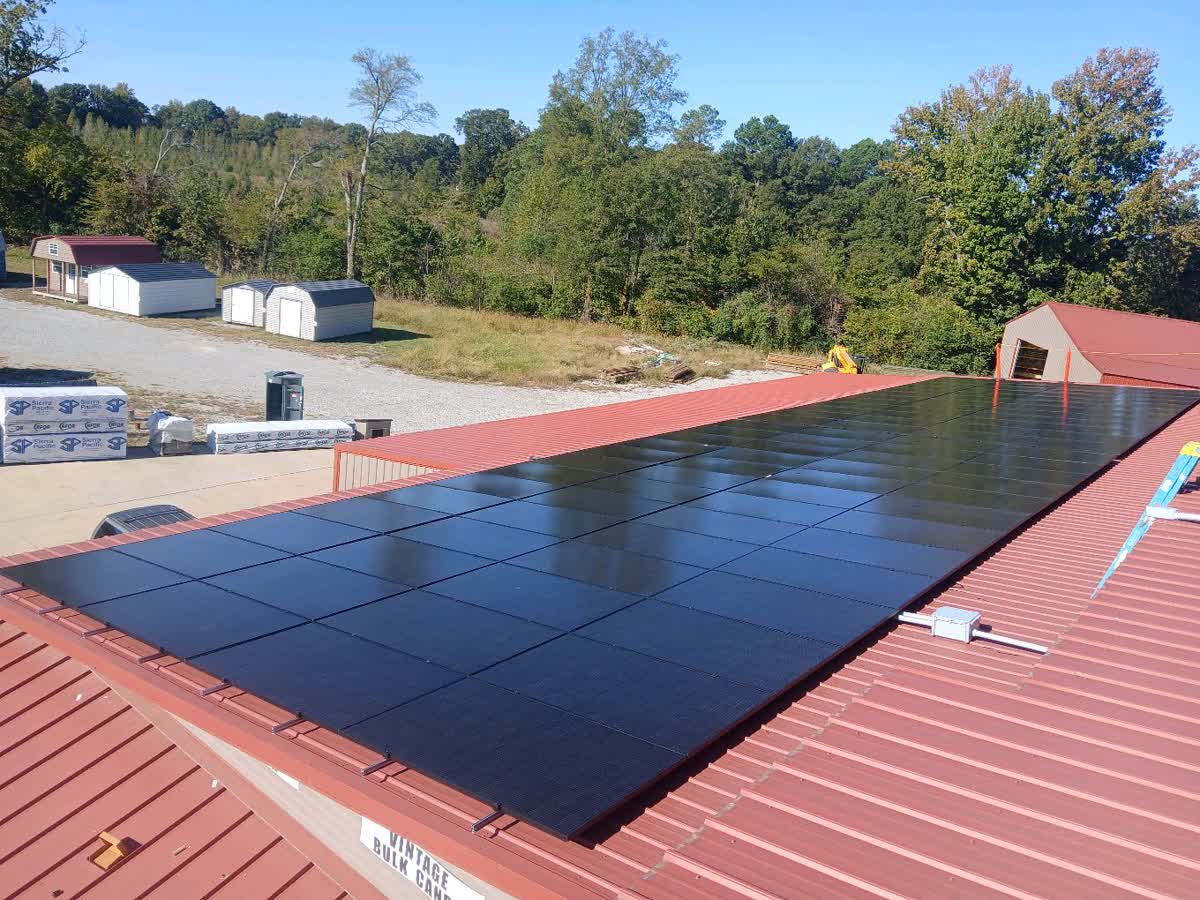
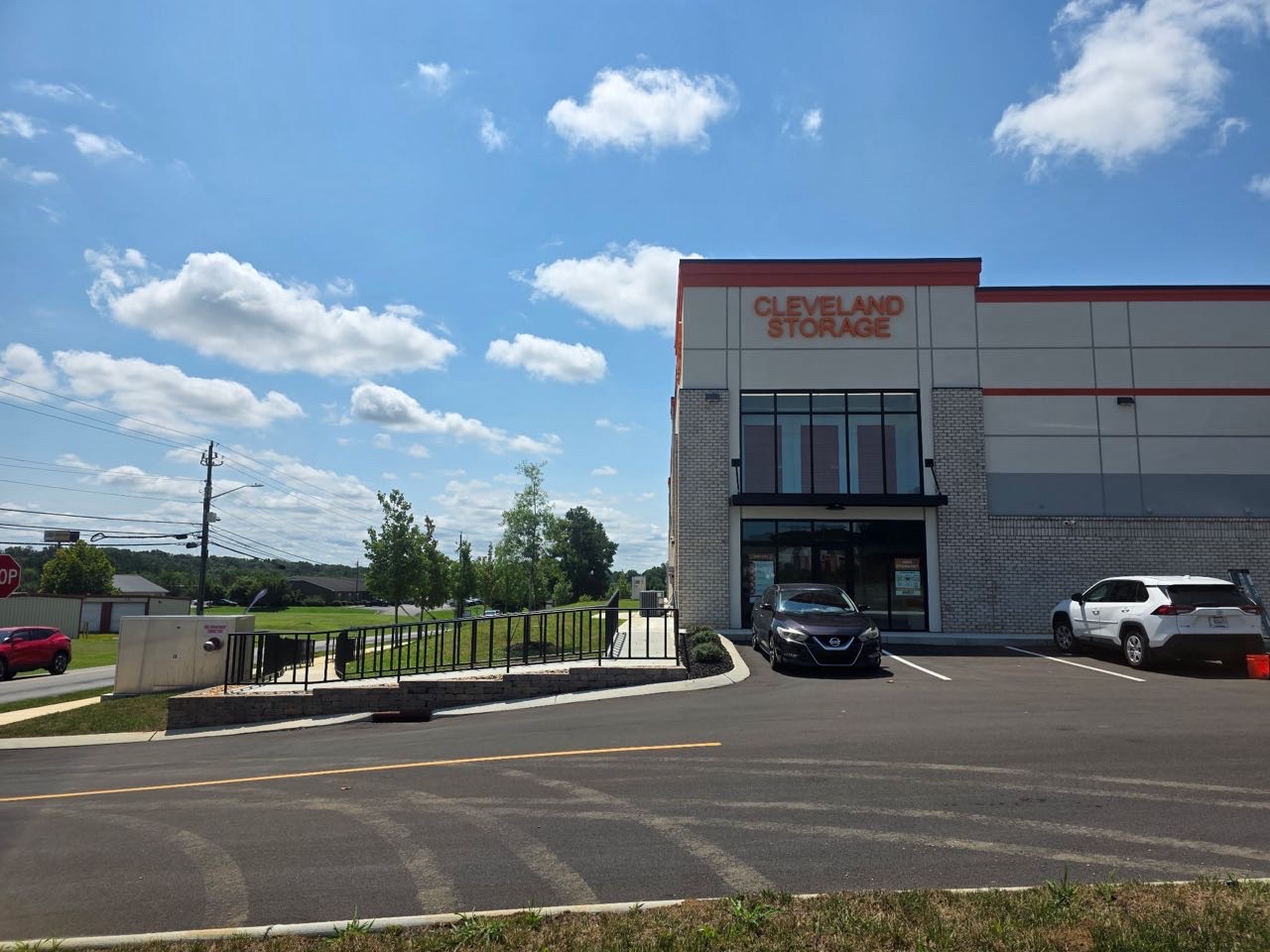
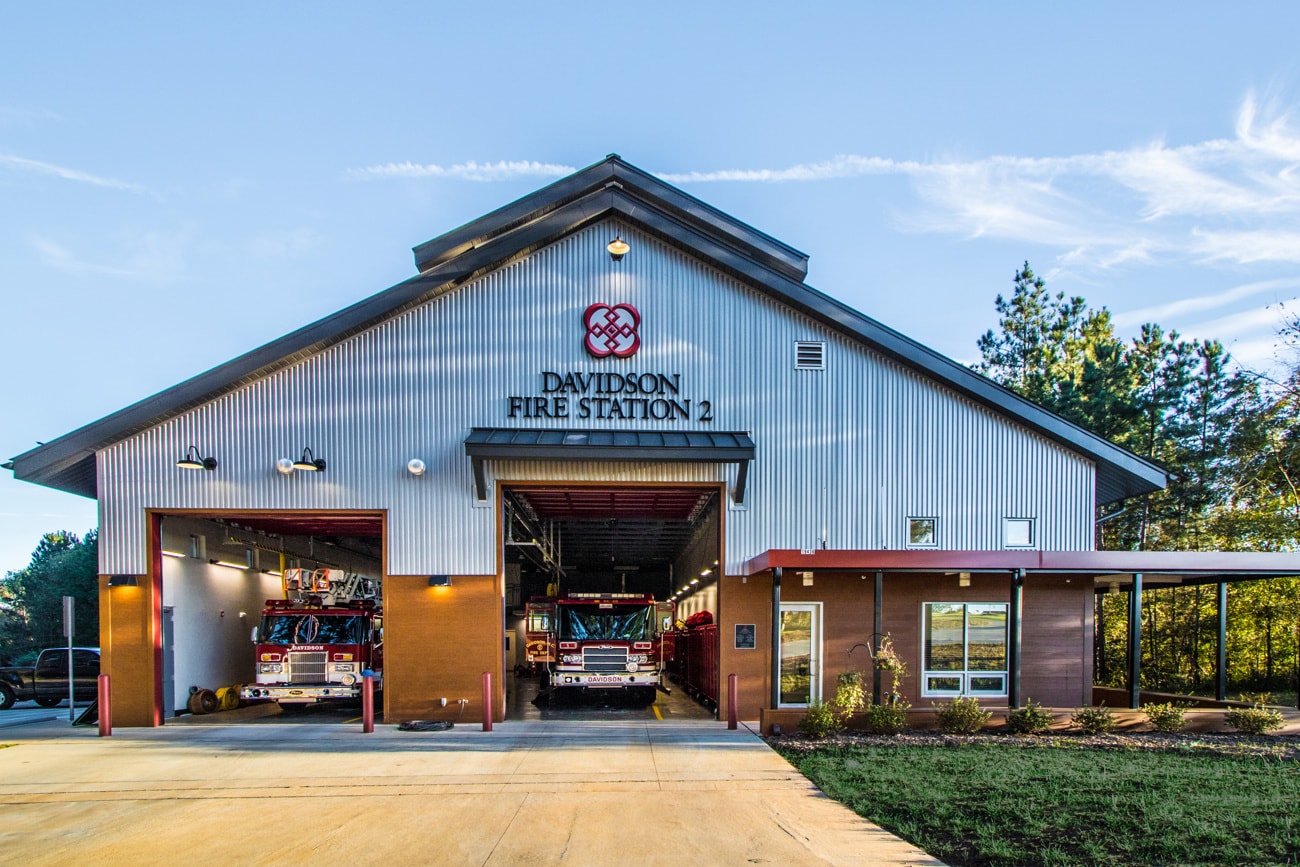
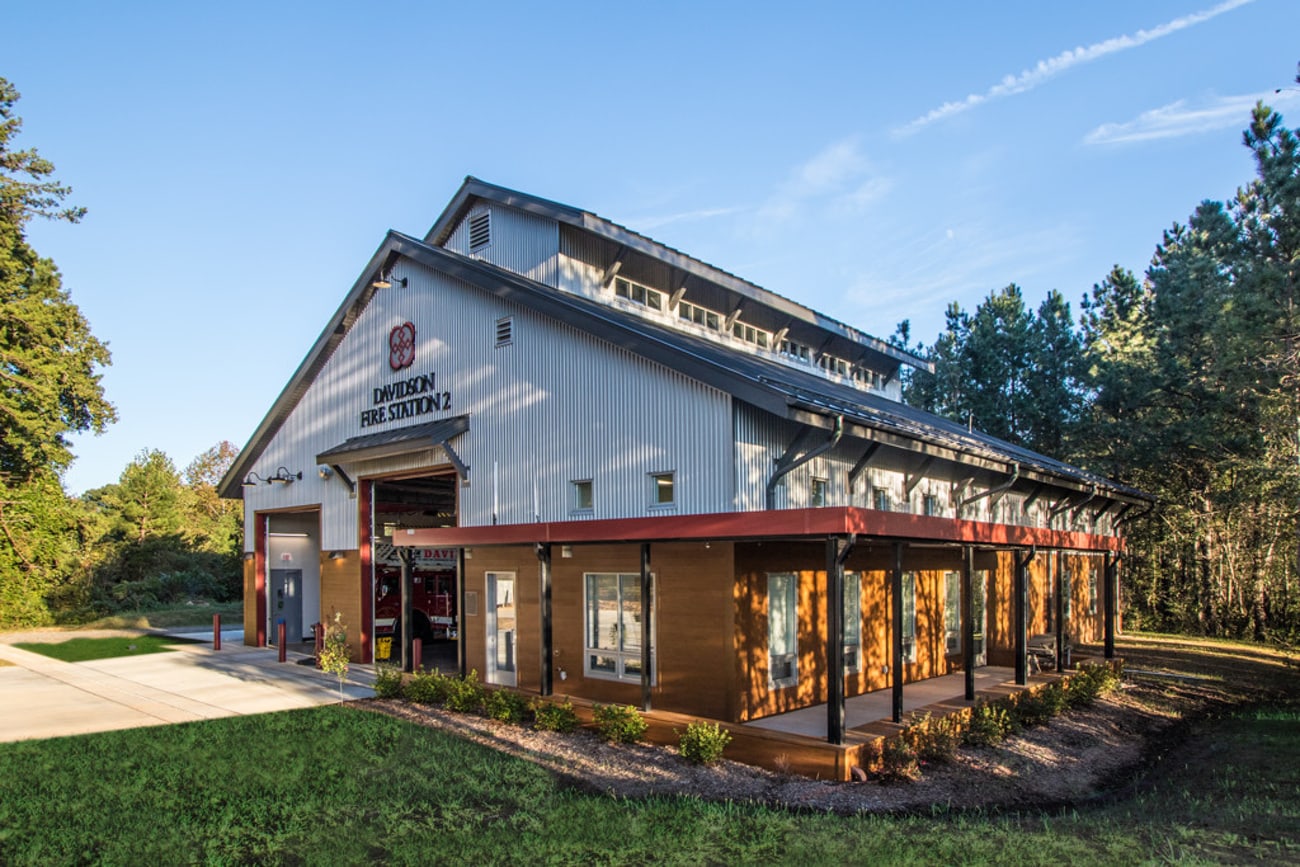
Located in Davidson, North Carolina, Davidson Fire Station #2 plays an important role in protecting the local community.
Commissioned in 2017, the approximately 5,931-square-foot facility operates around the clock, supporting firefighting, rescue operations, and emergency response services across the eastern part of Davidson. For a fire station, reliable electricity is essential. Power interruptions can affect facility operations at the very moment emergency response capabilities are most needed.
Recognizing the importance of energy resilience, the Town of Davidson launched a rooftop solar and battery storage initiative for Fire Station #2 as part of its broader commitment to sustainability and emergency preparedness. In May 2025, the North Carolina Department of Environmental Quality announced $144,000 in grant funding to support the project, with the goal of improving energy resilience during extreme weather events and utility outages.
The station already has an emergency generator. Rather than replacing that infrastructure, the new solar and battery system is intended to provide an additional layer of energy flexibility and backup support.
Location: Davidson, North Carolina, USA
Facility: Davidson Fire Station #2
Installer: Renu Energy Solutions
Application: Fire Station Backup Power & Energy Management
Battery: Pytes HV48100 SE
Configuration: 6S2P (12 Battery Modules)
Total Battery Capacity: 61.44 kWh
Nominal Battery Voltage: 307.2 VDC
Rated Battery Power: 30.72 kW
Hybrid Inverter: 1 × Sol-Ark 30K-3P-208V
Inverter Rated Power: 30 kW
System Application: Rooftop Solar + Battery Storage + Existing Generator
Unlike conventional commercial buildings, fire stations must be prepared to operate during emergencies, including severe weather and extended utility interruptions. Davidson Fire Station #2 needed an energy storage solution that could complement its existing backup infrastructure while supporting the town's broader renewable energy goals.
The project focused on three important priorities:
1. Strengthening Backup Power Readiness
Adding battery energy storage provides another potential source of electricity to support designated facility loads during outages.
2. Supporting Renewable Energy Utilization
Combining rooftop solar with battery storage enables more flexible use of locally generated energy and supports more efficient energy management.
3. Complementing Existing Infrastructure
With an emergency generator already in place, the new battery system is intended to strengthen the station's overall energy resilience without replacing its established backup generation equipment.
For a facility dedicated to public safety, the solution also required careful attention to battery safety, system integration, and equipment reliability.
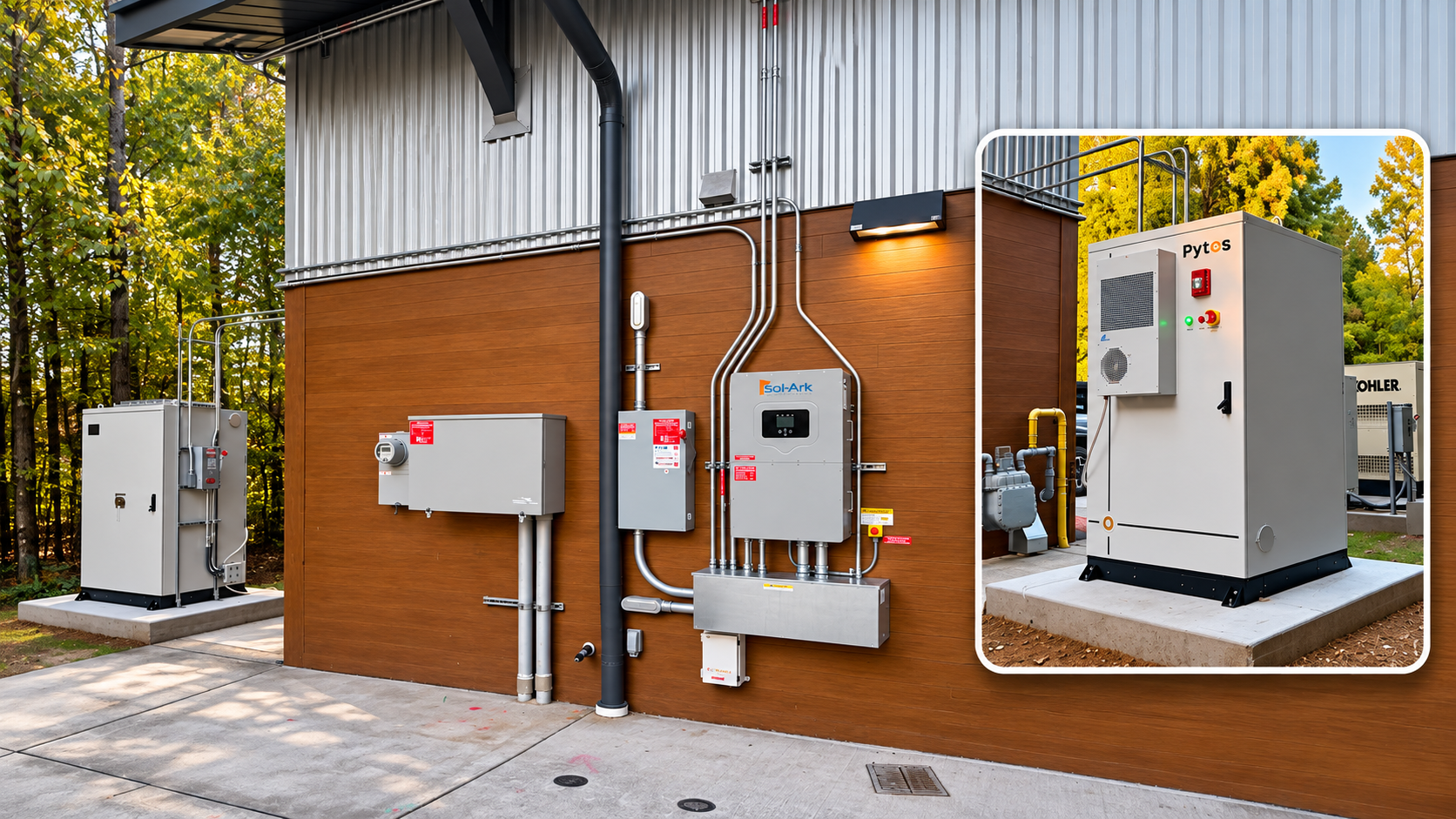
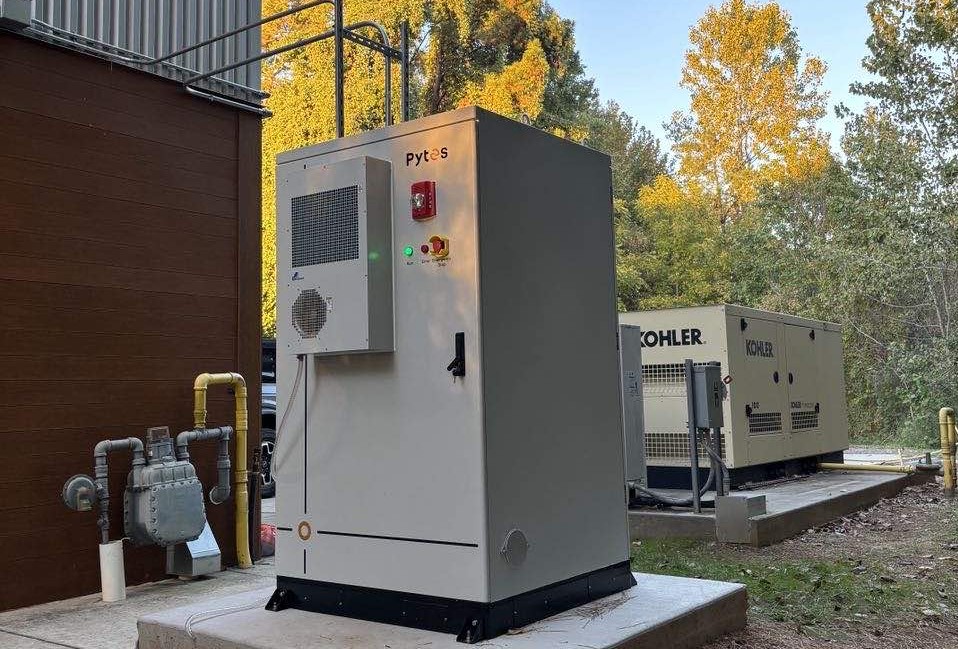
Working with Renu Energy Solutions, the project incorporates a Pytes HV48100 SE high-voltage battery cabinet, configured as 6S2P with twelve 5.12 kWh LFP battery modules. The system provides 61.44 kWh of nominal energy storage capacity, with a rated battery power of approximately 30.72 kW.
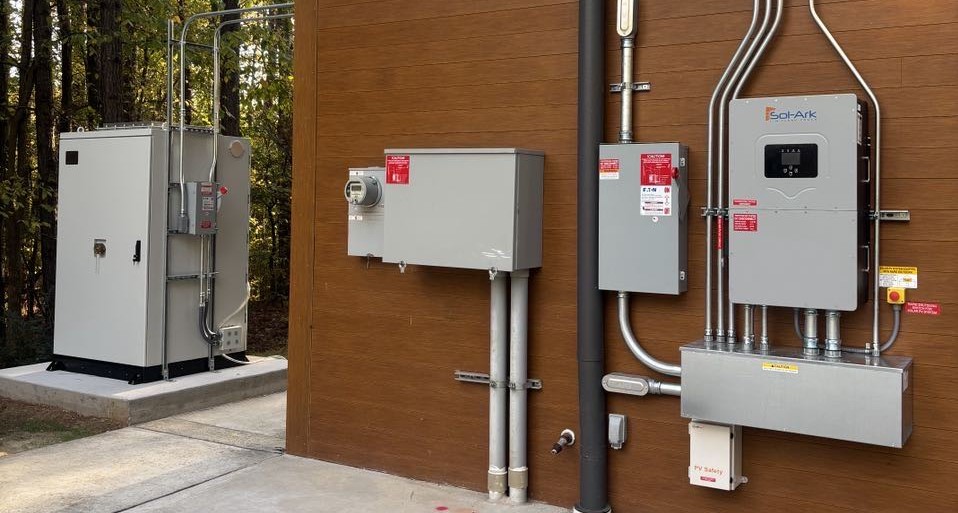
Paired with a Sol-Ark 30K-3P-208V hybrid inverter, the system is configured for a 120/208V three-phase commercial electrical application. The combination provides a battery storage architecture designed to support the facility's backup power strategy and broader energy management requirements.
As part of the station's solar-plus-storage initiative, the battery system is intended to store available energy for later use and provide additional flexibility during grid disturbances.
For facilities responsible for protecting the community, safety is a fundamental consideration. The Pytes HV48100 SE incorporates a multi-layer safety architecture, including battery monitoring and protection, hazardous gas detection, ventilation, aerosol fire suppression, and pressure relief features. These integrated safety measures are particularly relevant for commercial energy storage applications where fire protection, system documentation, and code compliance considerations play important roles in project development.
The 6S2P configuration provides 61.44 kWh of nominal energy capacity and approximately 30.72 kW of rated battery power, making it a practical configuration for a 30 kW hybrid inverter application. This enables a balanced approach to energy storage design, aligning battery capacity and power capability with the intended application rather than simply maximizing system size.
The HV48100 SE offers configurable high-voltage battery arrangements and a modular design suited to a range of commercial energy storage applications. Its flexibility makes it suitable for projects that must integrate storage into existing electrical infrastructure while allowing future system requirements to be considered during planning. Together, these characteristics make Pytes a compelling choice for public facilities seeking a balance of safety, performance, and system flexibility.
Davidson's investment in solar and battery storage reflects a broader effort to improve energy resilience across public facilities. According to regional project reporting, the solar-plus-storage initiative at Fire Station #2 is expected to offset approximately 50% of the facility's annual electricity use once operational. Beyond renewable energy generation, the addition of battery storage is intended to provide greater flexibility during power interruptions and complement the facility's existing emergency generator.
For public safety infrastructure, this approach demonstrates how energy storage can contribute to long-term operational preparedness. The Davidson Fire Station #2 project highlights the potential of Pytes HV48100 SE battery storage in essential public facilities, where energy resilience, safety-focused design, and practical system integration are key priorities.
Pytes — Power a Better Life.