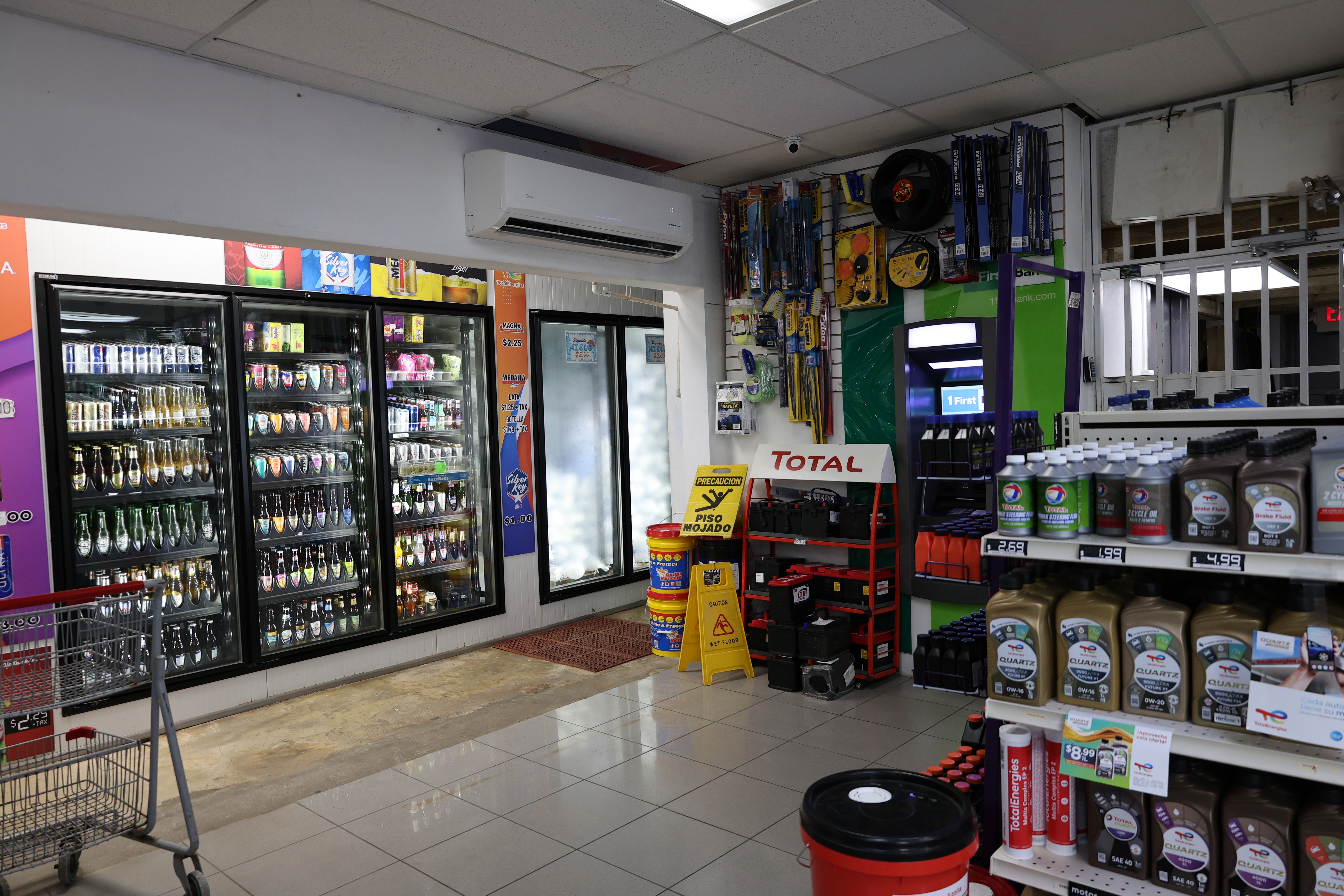
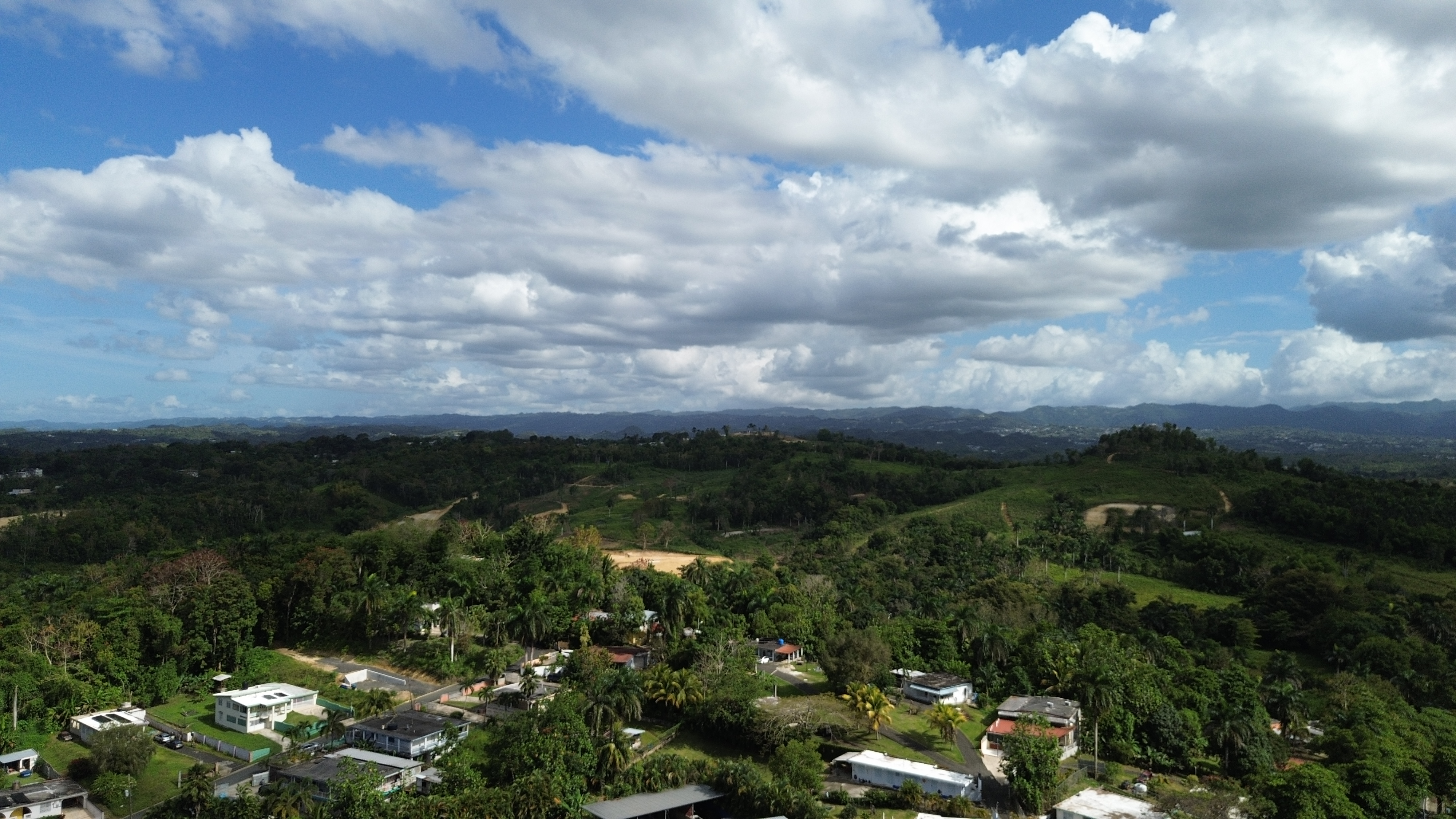
The TotalEnergies station at Barrio Pugnado Adentro sits at the intersection of Carr. 137 and Road 643 in Vega Baja — a north coast municipality about 30 kilometers west of San Juan. Operating daily from 6 AM to 10 PM, the station serves as a critical supply point for the surrounding community: fuel pumps, a convenience store, refrigerated beverages and food, a prepared food counter, and point-of-sale services. With a 4.4-star rating and over 220 Google reviews, it is an established and trusted part of local daily life.
Vega Baja is part of a grid network that has never fully recovered from Hurricane Maria (2017), which left large parts of Puerto Rico without power for up to 181 days. Hurricane Fiona (2022) caused another island-wide blackout. According to the U.S. Energy Information Administration, in 2024 alone, Puerto Rico customers went without electricity for an average of more than 73 hours — some of the worst outage statistics of any U.S. jurisdiction. For commercial operations in Vega Baja, outages are not exceptional events. They are operational reality.
Puerto Rico's hurricane season runs from June through November — six months of every year when tropical storms, heavy rainfall, and high winds can knock out transmission lines with little warning. For a gas station, this is the most dangerous operating window: the period when fuel demand spikes (residents evacuating or stocking up), and when grid reliability collapses entirely.
Before the solar-plus-storage system was installed, the station relied on a diesel generator as its sole backup power source. The arrangement looked adequate in theory. In practice, it was a recurring liability.
The generator failed unpredictably. In Puerto Rico's heat and humidity, diesel generators cycle hard and degrade fast. The station's unit developed a pattern of failure precisely when it was needed most — during sustained outages when the machine ran continuously. Each failure required dispatching a technician on-site to diagnose and restart it manually. During island-wide events, when every business and household on the grid needed help simultaneously, getting anyone there quickly was nearly impossible.
The cost of every failure compounded quickly.
1)When the generator went down and the grid was already out, the station lost everything at once:
2)Fuel pumps offline — no revenue from the station's primary business
3)Underground compressor stopped — fuel delivery and replenishment impossible, extending disruption beyond the outage itself
4)Refrigeration failed — beverages, dairy, and prepared food spoil rapidly in Puerto Rico's 30°C+ heat; a single 12-hour failure could render an entire refrigerated section unsalvageable
5)POS and cash registers down — no transactions possible, in cash or card
6) Lighting and security systems offline — forecourt and store dark
The longest recorded outage at this station exceeded 12 hours of total darkness. Direct revenue loss per major incident ran to thousands of dollars. Add spoilage, emergency labor costs, and the slower reputational damage of customers who fill up elsewhere and don't come back — and the financial case for a better solution was clear.
During hurricane season, the stakes were higher still. A storm that kept the grid down for days could mean multiple back-to-back failures, stretching losses across an entire week. The generator — unreliable on a good day — was no match for sustained tropical weather.
The station was fitted with a purpose-built commercial solar-plus-storage system designed to eliminate generator dependency entirely and guarantee continuous operation regardless of grid status.
System Configuration:
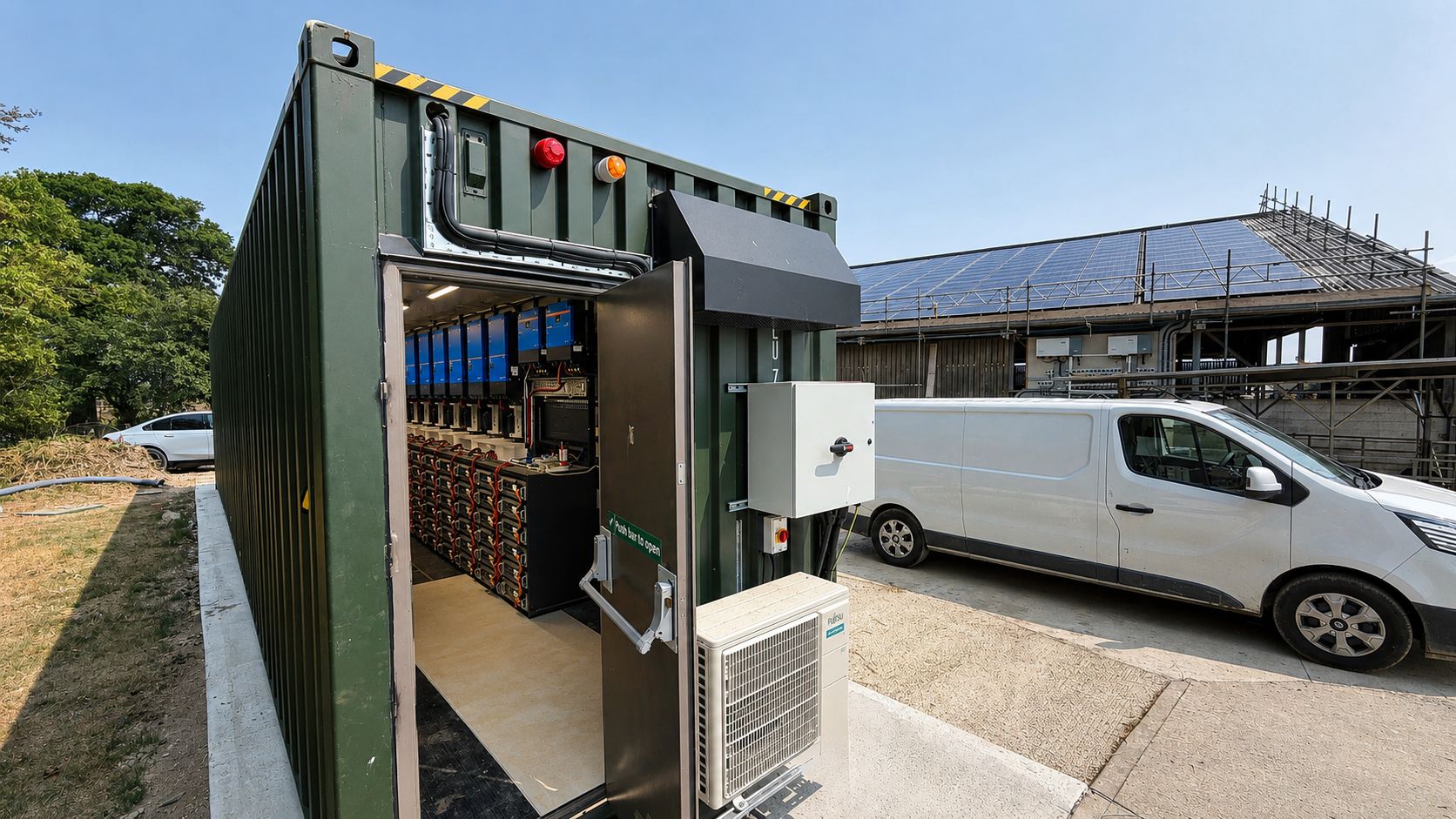
1) 2 × Pytes HV48100 Indoor Solution: 40 kWh per unit, 80 kWh total, LFP chemistry
2) Sol-Ark 30K: 30 kW commercial-grade All-in-One hybrid inverter
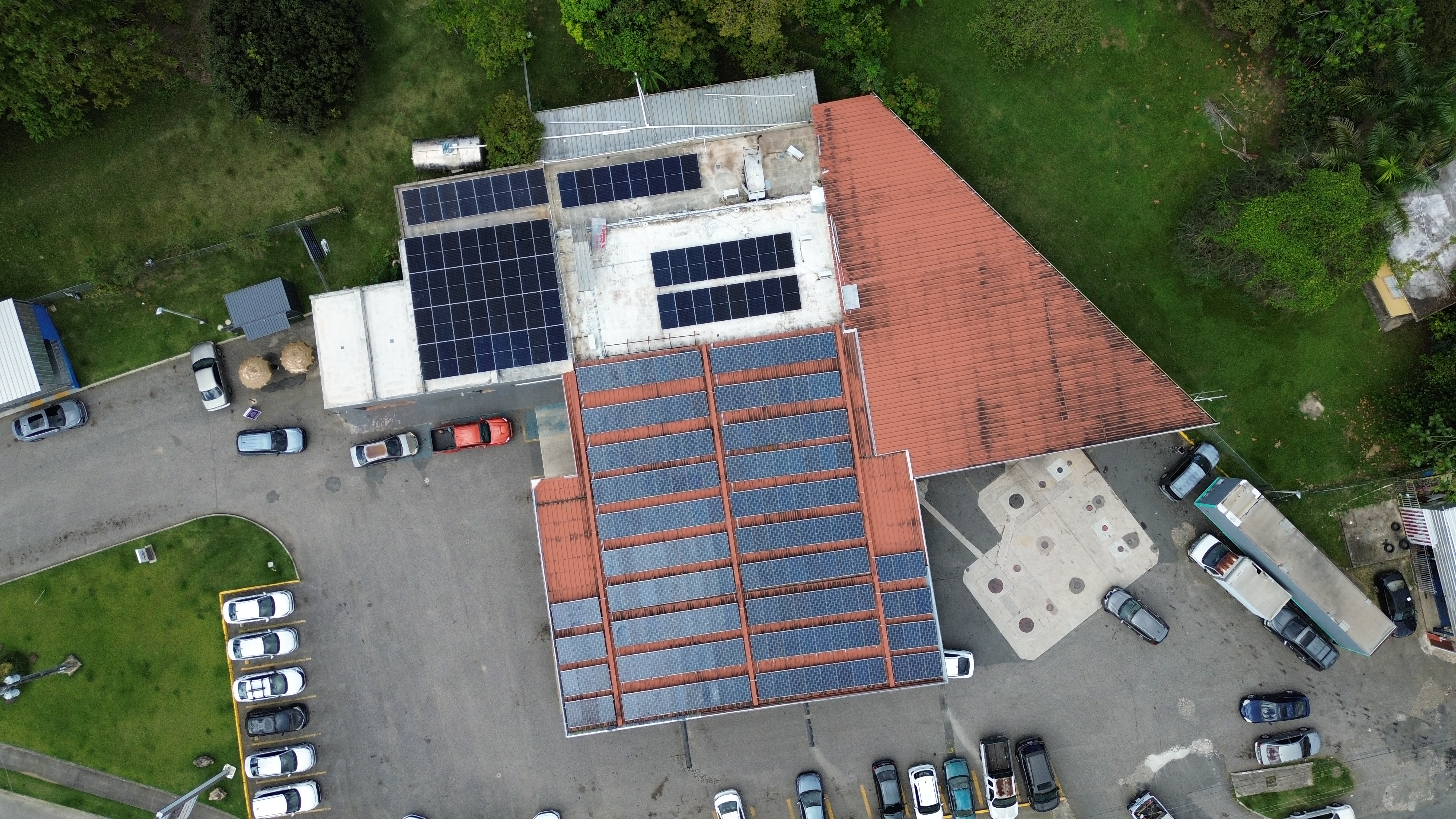
3) Rooftop solar PV array: daily recharge from Puerto Rico's abundant sunlight
4) Grid-tied: self-consumption primary
The Sol-Ark 30K sits at the center of the system, managing every energy source. Solar PV enters as DC through the MPPT controllers. The grid connects as AC. The HV48100 batteries sit on the DC bus and communicate with the inverter through closed-loop CAN/RS485 protocol, providing real-time state of charge and system health data. No energy source bypasses the inverter — all conversion happens through a single, intelligent hub.
In normal operation, solar charges the batteries through the day and powers station loads in real time. When the grid fails — as it does regularly in Vega Baja — the system transitions to island mode seamlessly, with no interruption to operations. Pumps keep running. The POS stays live. Refrigeration never stops. Customers notice nothing.
At 80 kWh of usable storage, the system can carry the station's full commercial load through any typical overnight outage, through a 12-hour event like those previously experienced, and well into multi-day scenarios — with the solar array recharging the batteries each morning from Puerto Rico's 300+ annual sunny days.
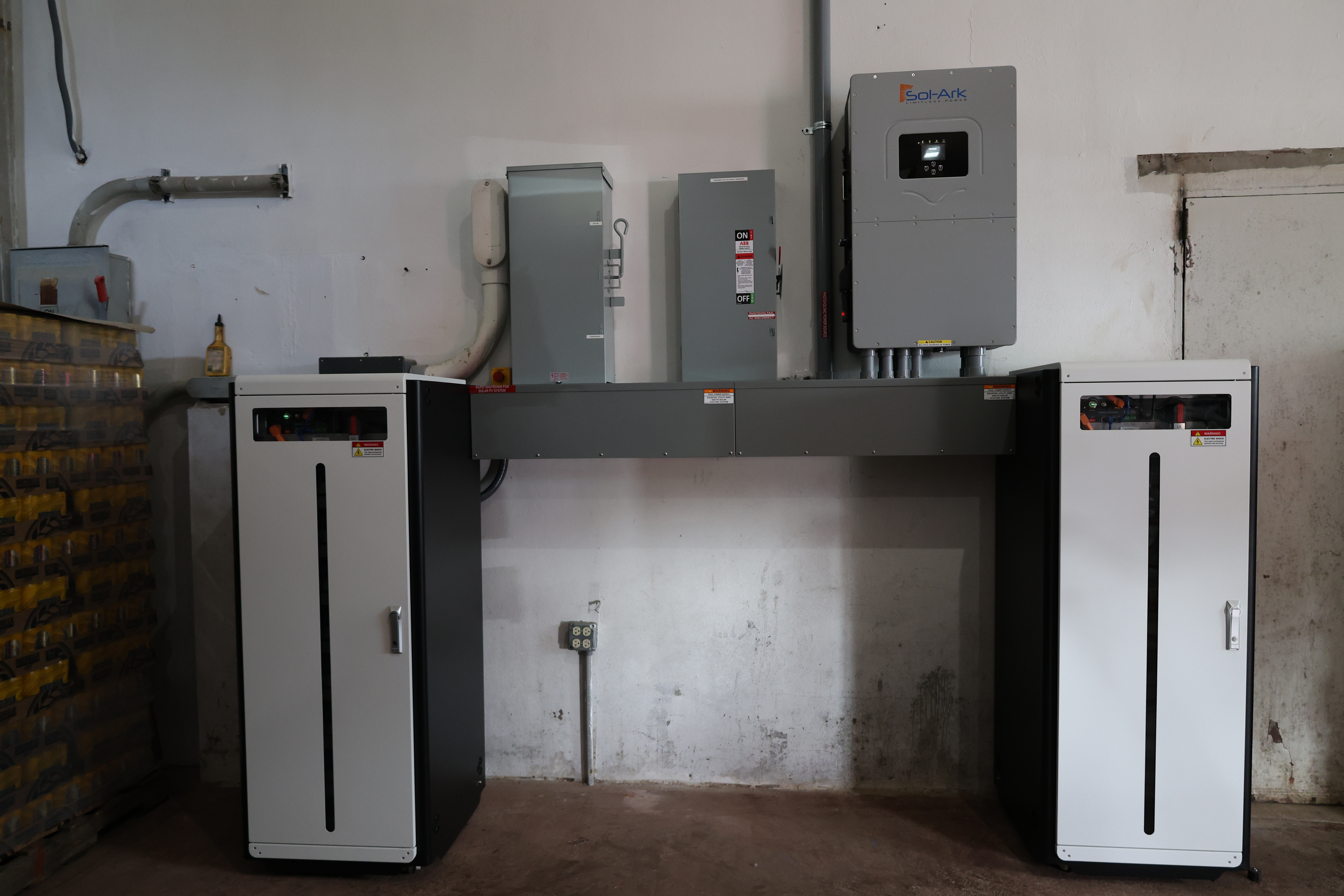
Commercial-scale capacity in a rack-mount indoor format. The HV48100 is built for demanding commercial environments — distributed cabinet architecture keeps battery cells in a controlled indoor environment, protected from the heat, humidity, and salt air that accelerate degradation in Puerto Rico. For a gas station where the energy system needs to run in the background reliably for years, this construction approach matters.
Native closed-loop integration with Sol-Ark. The HV48100 communicates with the Sol-Ark 30K via CAN and RS485, enabling the inverter to manage battery charging, discharge depth, and system health in real time. No external BMS adapter. No manual configuration. The system operates as a single integrated unit — and that simplicity translates directly to reliability.
LFP chemistry — safe for indoor commercial installation. Lithium Iron Phosphate is the most thermally stable lithium chemistry available. No thermal runaway risk. No requirement for fire suppression infrastructure beyond standard commercial codes. For a busy public-facing business with staff and customers on-site, that safety profile is a practical requirement.
Scalable architecture. The HV48100 system supports expansion by adding BMUs or additional cabinet sets, without replacing the inverter or rewiring the installation. As the station's load profile grows or the operator wants more days of autonomy, the system can grow with it.
Local Pytes presence and fast after-sales support. Pytes has sales and technical staff in Puerto Rico. When the old generator failed, the station had to dispatch a technician and wait. With the Pytes system, remote monitoring via the Sol-Ark's MySolArk platform means issues are flagged and diagnosed before they become failures — and when on-site support is needed, it comes from people who are actually on the island.
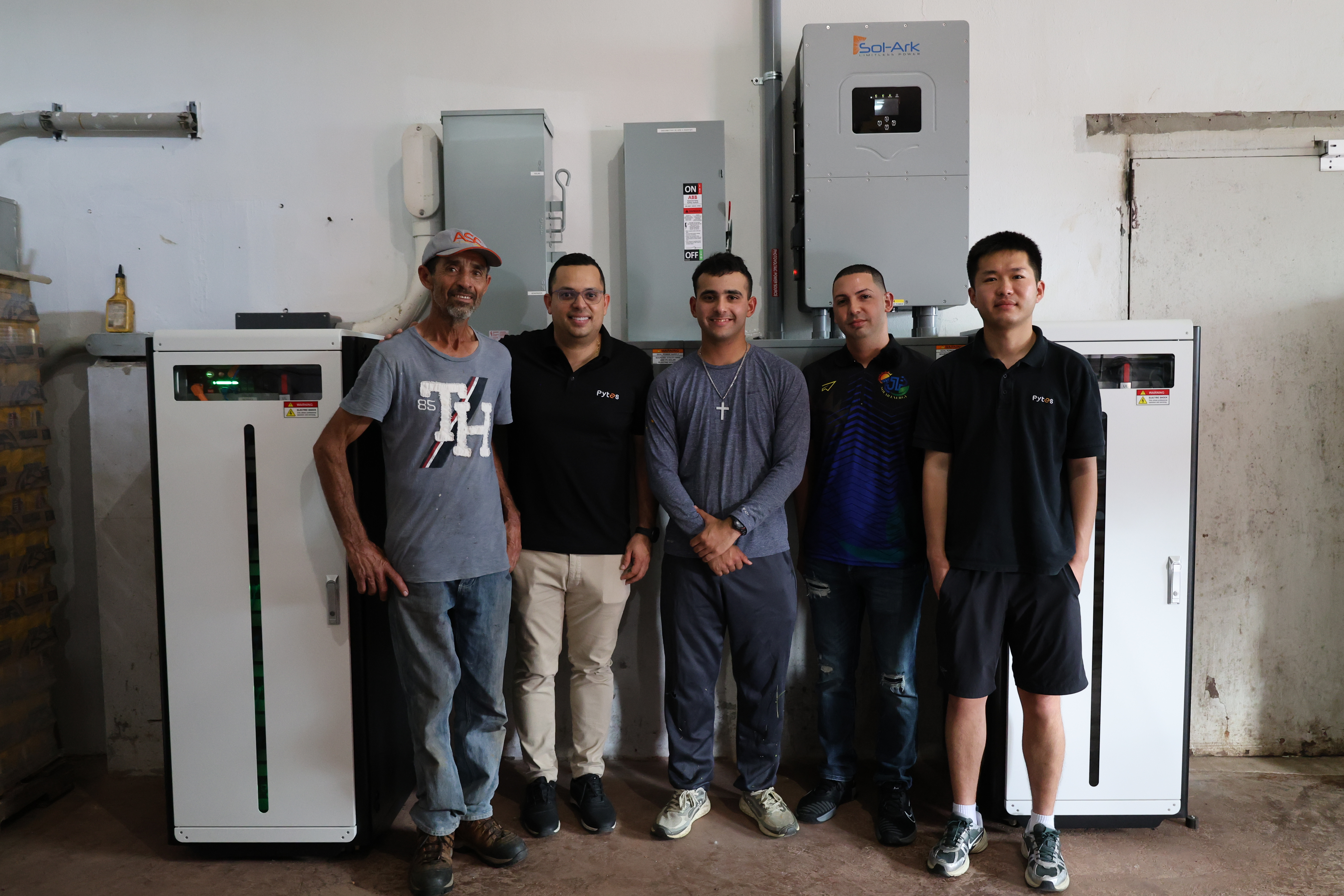
The system works. Perfectly. Every day.
Pumps run through outages that shut down other stations on the same street. Refrigeration holds temperature through the night. The POS never goes dark. The convenience store stays open. Staff work without interruption. Customers arrive to find exactly what they expect.
Hurricane season — once the most operationally anxious time of the year — has become manageable. When a storm hits and the grid collapses, the station runs on solar and stored energy. If the grid is down for days, the batteries recharge each morning from the sun. The station that used to dread hurricane season now simply operates through it.
The economic math is straightforward. Every hour of downtime the old generator caused represented thousands of dollars in lost revenue, spoiled inventory, and emergency labor. Every one of those hours is now eliminated. The system paid for itself not in years of energy savings alone, but in the immediate, quantifiable elimination of recurring catastrophic losses.
"Before, every time the power went out, the phone started ringing — technician, manager, supplier. Now the lights stay on, the pumps keep running, and nobody even notices the grid is down. Peace of mind."— Station Operator, TotalEnergies Barrio Pugnado, Vega Baja, Puerto Rico