Latin America’s energy market is entering a critical transformation phase. After years of rapid renewable energy development, countries such as Brazil, Chile, and Mexico are now facing a new challenge: how to manage increasing renewable generation while maintaining grid stability and energy reliability. Battery energy storage systems (BESS) are becoming a key solution to address power fluctuations, renewable curtailment, and growing electricity demand.
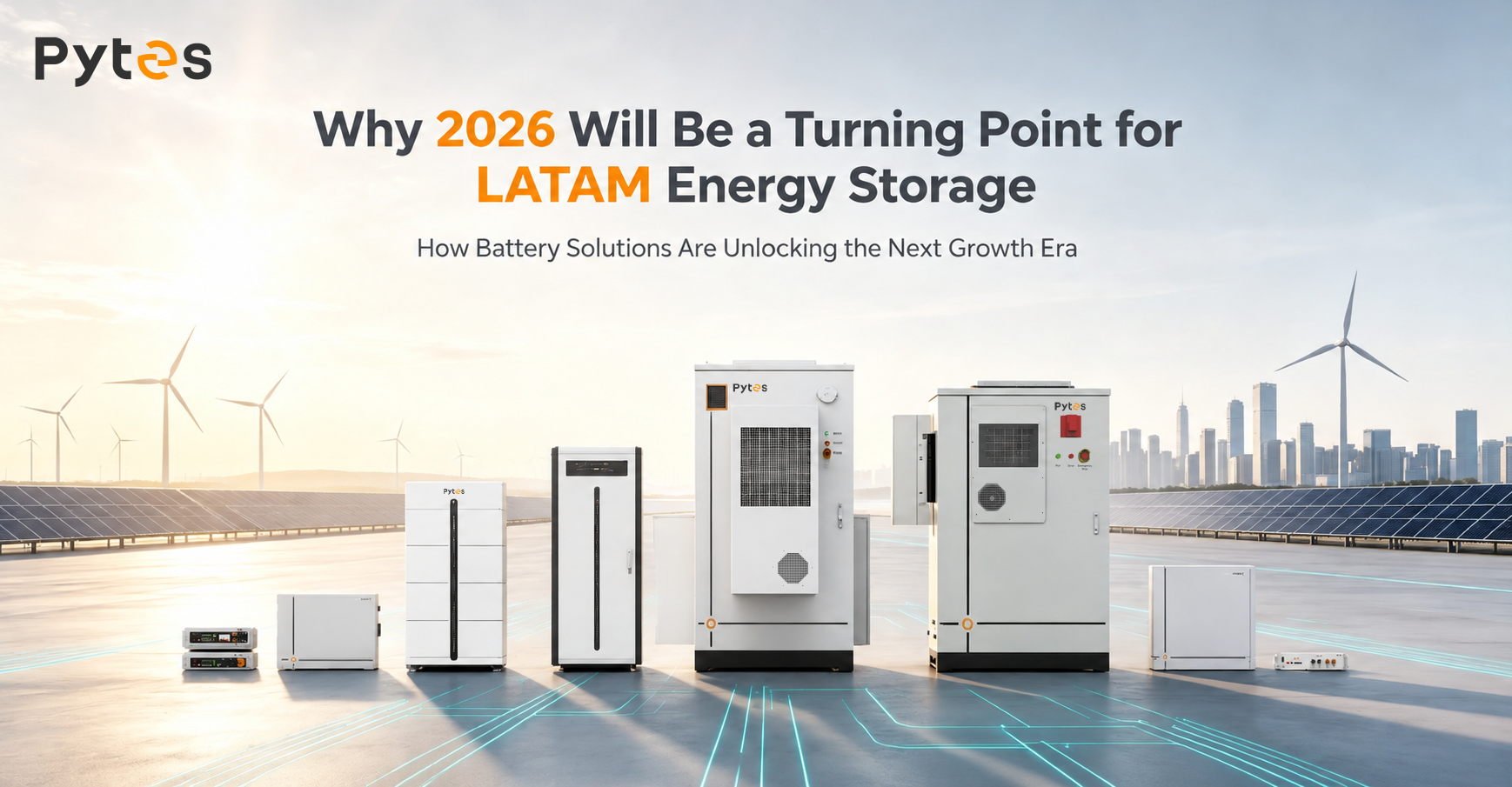
According to Aurora Energy Research’s latest analysis, 2025 became a turning point for Latin America’s power markets. Rising market volatility, renewable curtailment issues, regulatory changes, and increasing security-of-supply concerns highlighted the urgent need for flexible energy resources. In 2026, new market mechanisms—including Brazil’s first battery capacity auction, Chile’s evolving ancillary service framework, and Mexico’s changing regulatory environment—are expected to accelerate the commercialization of energy storage.
For households, commercial facilities, renewable developers, and grid operators, energy storage is no longer only a backup solution. It is becoming an essential infrastructure component that enables greater energy independence and a more resilient power system.
Latin America has some of the world’s strongest renewable energy resources. Brazil benefits from abundant solar, wind, and hydropower resources, while Chile has become a global leader in solar deployment due to its exceptional Atacama Desert conditions.
However, rapid renewable expansion has created new operational challenges.
Solar and wind generation are naturally variable. During periods of high renewable production, electricity supply can exceed grid demand, causing renewable curtailment. At other times, insufficient renewable output requires additional power resources to maintain grid balance.
Brazil, for example, has experienced increasing concerns around renewable curtailment as transmission limitations and generation growth create grid management challenges. Energy storage is increasingly viewed as an effective solution for absorbing excess renewable energy and releasing it when demand increases.
Battery systems allow renewable energy to become more flexible. Solar power generated during daytime hours can be stored and delivered during evening peak demand, improving renewable utilization while reducing pressure on traditional power generation.
Brazil is emerging as one of the most important energy storage markets in Latin America.
The country’s large renewable energy base creates strong demand for flexibility solutions. As solar and wind penetration increases, battery storage can provide frequency regulation, peak management, and grid balancing services.
A major development expected to influence the market is Brazil’s first battery capacity auction, which represents an important step toward creating a clearer revenue model for BESS projects.
For commercial and industrial users, battery storage also provides opportunities to reduce electricity costs through peak shaving and demand management. Energy-intensive businesses can store electricity when prices are lower and use stored power during expensive peak periods.
Chile has become one of the most advanced battery storage markets in Latin America.
The country’s rapid solar growth has created significant opportunities for large-scale BESS deployment. Energy storage helps solve one of Chile’s biggest challenges: moving renewable electricity from periods of high generation to periods of higher demand.
Aurora Energy Research highlights that Chile is entering a new phase where the value of BESS depends increasingly on revenue optimization, ancillary services, and effective market participation.
This shift means future storage projects must focus not only on battery capacity but also on system efficiency, reliability, lifecycle performance, and intelligent energy management.
Mexico is also becoming an important market for battery energy storage.
As renewable projects continue developing, storage is expected to play a larger role in improving grid flexibility and supporting renewable integration. Aurora Energy Research notes that ancillary services and capacity-related revenue streams are becoming important factors for battery project economics in Mexico.
For distributed energy users, storage systems provide additional value by improving backup power capability and reducing dependence on unstable grid conditions.
As energy storage markets accelerate across Latin America, reliable battery technology becomes increasingly important. Pytes Energy has established itself as a trusted energy storage brand by developing solutions designed for residential, commercial, and renewable energy applications.
Pytes focuses on creating flexible battery systems that simplify installation while delivering dependable performance. Its product portfolio includes low-voltage server rack batteries, stackable modular energy storage systems, and high-voltage (HV) solutions designed to meet different application requirements.
For residential users, modular battery systems provide a scalable approach to energy independence. Homeowners can expand storage capacity according to changing electricity needs without replacing the entire system.
For commercial applications, reliable battery systems help businesses manage energy consumption, improve backup capability, and integrate renewable power more effectively.
As Latin American markets move toward larger-scale renewable integration, Pytes continues strengthening its global energy storage solutions through product innovation, safety-focused engineering, and user-oriented system design.
The next stage of Latin America’s energy transition will not only depend on building more renewable generation capacity. The key challenge will be creating a flexible energy infrastructure capable of balancing supply and demand.
Battery energy storage systems provide this missing flexibility.
From large-scale grid projects in Chile to commercial applications in Brazil and distributed energy systems across Mexico, storage technology is becoming a critical bridge between renewable generation and reliable electricity supply.
The market direction for 2026 is clear: energy storage will move from early-stage deployment toward broader commercial adoption.
Companies that invest in reliable, scalable, and efficient battery solutions will be better positioned to participate in this rapidly expanding market. With advanced modular designs and comprehensive energy storage solutions, Pytes is helping accelerate the transition toward a cleaner, more resilient, and more independent energy future across Latin America and beyond.