As commercial and industrial energy storage projects continue to expand, battery systems are facing higher requirements for energy density, safety, scalability, and long-term operational reliability. For applications such as hospitals, schools, industrial facilities, microgrids, and renewable energy integration projects, a battery system must not only provide large energy capacity but also maintain stable performance under complex environmental conditions.
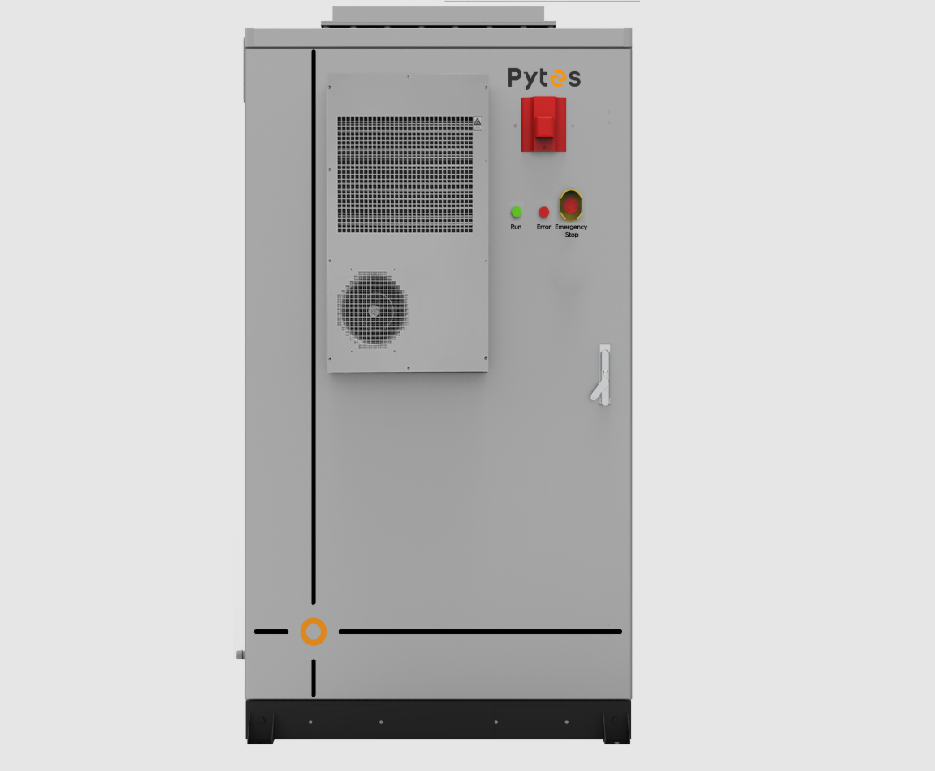
The Pytes Energy HV48100 SE is developed as a high-voltage lithium iron phosphate (LFP) energy storage solution, combining modular architecture, outdoor protection capability, intelligent battery management, and flexible system expansion. With a maximum rated energy configuration of 76.8kWh per system, an operating voltage range up to 864V, and support for scalable configurations, the HV48100 SE provides a reliable foundation for medium and large-scale energy storage applications.
Traditional low-voltage battery systems often require higher current transmission when supporting large loads, which can increase cable requirements and energy losses. High-voltage battery architectures solve this challenge by increasing system voltage while reducing current demand under the same power output.
The Pytes HV48100 SE adopts a modular high-voltage design based on LFP battery technology. Each battery module provides:
· Nominal voltage: 51.2V
· Nominal energy: 5.12kWh
· Nominal capacity: 100Ah
· Continuous charge/discharge current: 50A
· Cycle life: ≥6,000 cycles
By combining multiple modules in series, the system can achieve different voltage and capacity configurations to match various inverter platforms and project requirements. According to the official specifications, the system supports configurations from 51.20kWh to 76.80kWh rated energy, with rated power ranging from 25.60kW to 38.40kW depending on module configuration.
This flexible voltage design enables installers and system integrators to optimize battery sizing according to load characteristics, renewable generation profiles, and backup power requirements.
For commercial energy storage projects, insufficient battery capacity can limit renewable energy utilization and backup duration. The HV48100 SE addresses this challenge through a scalable modular structure.
The largest configuration reaches:
· Rated energy: 76.80kWh
· Rated power: 38.40kW
· Operating voltage: 712.5V–864V
· Charge/discharge current: 50A × 2 / 50A
This capacity level allows the system to support longer backup operation, peak load management, and renewable energy shifting applications.
For example, when paired with photovoltaic systems, the HV48100 SE can store excess solar generation during daytime hours and release stored energy during peak demand periods, helping businesses reduce grid dependency and improve energy utilization efficiency.
Commercial battery storage systems are often installed in environments where temperature fluctuations, dust, humidity, and corrosion can affect long-term reliability.
The HV48100 SE is designed for outdoor deployment with:
· IP55 protection rating
· Operating temperature range: -20°C to 55°C
· C4-M anti-corrosion grade
· Outdoor and indoor installation capability
The IP55 enclosure helps protect internal components from dust and water exposure, while the C4-M corrosion resistance design improves durability in challenging environments such as coastal areas or industrial locations.
Compared with standard indoor battery cabinets, this outdoor-ready structure reduces installation limitations and provides more flexibility for system deployment.
Battery temperature management directly influences safety, efficiency, and service life. Excessive heat can accelerate battery aging, while low temperatures can reduce charging performance.
The HV48100 SE integrates multiple thermal management technologies:
· Air cooling system for heat dissipation
· Built-in fans for thermal circulation
· Heating film system for cold environments
The heating film supports operation in low-temperature conditions, while active cooling improves thermal stability during high-load operation. This design helps maintain consistent battery performance across different climates.
For applications such as medical facilities, schools, and industrial infrastructure, battery safety is a primary selection factor.
The HV48100 SE incorporates multiple safety mechanisms, including:
· Tier-1 automotive-grade battery cells
· Self-developed battery management system (BMS)
· Active fire suppression system
· Pressure relief design
· Circuit breaker protection
The integrated BMS continuously monitors critical parameters including voltage, current, temperature, and battery status, helping prevent abnormal operating conditions and improving system reliability.
The product is also designed according to multiple safety standards, including UL 9540, UL 9540A, and UL 1973 compliance requirements.
Large-scale energy storage systems require convenient operation monitoring and maintenance management. The HV48100 SE supports intelligent communication functions through:
· CAN communication
· RS485 communication
· Dry contact
· WiFi connectivity
· Remote monitoring through Pytes Battery Cloud
This enables installers and operators to monitor system status remotely, improve maintenance efficiency, and identify potential issues before they affect operation.
The modular design also allows capacity expansion according to future energy requirements. Instead of replacing the entire battery system when demand increases, users can expand storage capacity step by step, reducing long-term investment pressure.
Performance Factor | Pytes HV48100 SE | Traditional Low-Voltage Systems |
Battery Chemistry | LFP | Usually LFP |
Maximum Rated Energy | Up to 76.8kWh | Depends on parallel quantity |
System Voltage | Up to 864V | Typically around 48V–51.2V |
Cycle Life | ≥6,000 cycles | Depends on battery design |
Outdoor Installation | IP55 enclosure | Often requires additional protection |
Expansion Method | Modular high-voltage expansion | Parallel battery expansion |
The main advantage of a high-voltage architecture is that it enables more efficient power transmission, easier integration with commercial inverters, and better scalability for larger energy storage projects.
The Pytes HV48100 SE combines 76.8kWh maximum energy capacity, high-voltage modular architecture, IP55 outdoor protection, C4-M corrosion resistance, ≥6,000 cycle life, and intelligent monitoring capability into one commercial energy storage platform.
For businesses seeking reliable backup power, renewable energy integration, or scalable battery storage infrastructure, the HV48100 SE provides a flexible solution designed for long-term performance in demanding environments.
With its combination of safety engineering, modular expansion, and high-voltage efficiency, the HV48100 SE represents a new generation of commercial LFP energy storage systems built for the evolving energy market.