As residential energy storage systems become more widely used in homes, garages, utility rooms, and indoor installation spaces, safety has become one of the most important questions for homeowners, installers, AHJs, and insurance stakeholders.
For many homeowners, the question is simple:
Will a home battery explode if there is a fire?
To answer that question with real test data, Pytes subjected the Pytes V16 residential battery to UL 9540B large-scale fire testing. The test result demonstrates that V16 is designed not only for energy capacity and performance, but also for real-world fire safety validation.
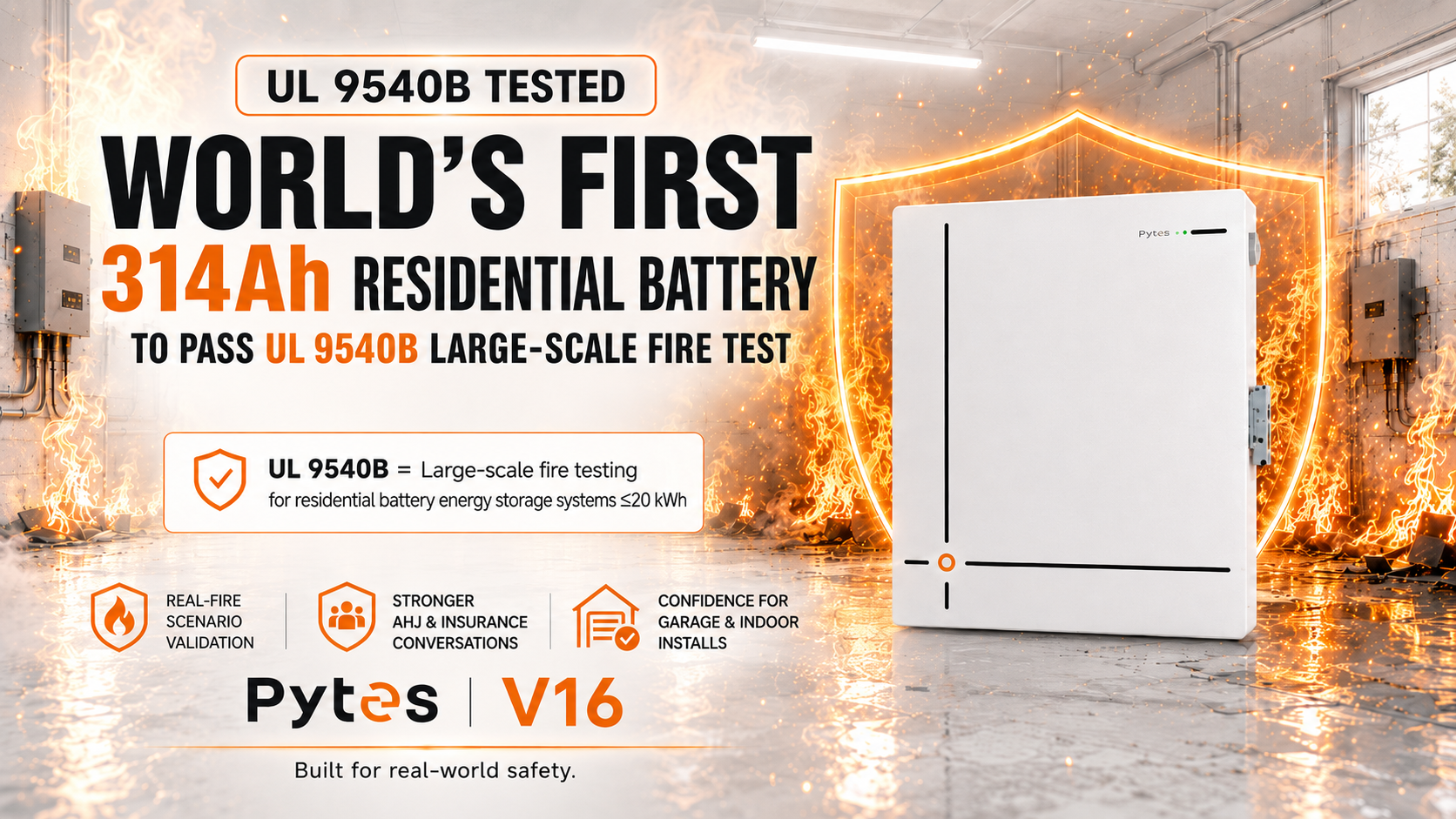
UL 9540B is the Outline of Investigation for Large-Scale Fire Test for Residential Battery Energy Storage Systems. It was developed to evaluate the large-scale fire propagation characteristics of residential ESS under more robust ignition scenarios and enhanced acceptance criteria.
Unlike general product claims, UL 9540B focuses on how a residential battery energy storage system behaves when exposed to severe fire conditions. The test is especially relevant for residential systems where batteries may be installed near living spaces, vehicles, building structures, or other electrical equipment.
For installers and permitting authorities, this type of testing provides more practical information about whether a system can help contain or minimize fire spread under extreme conditions. UL Solutions also notes that large-scale fire testing can support installation and commissioning instructions and help inform whether the system and installation can contain or minimize fire spread.
Residential batteries are no longer niche products. They are becoming part of everyday home energy infrastructure, supporting solar self-consumption, backup power, energy resilience, and time-of-use optimization.
But with wider adoption comes a higher expectation for safety.
A battery installed in a garage or indoor environment must prove more than electrical performance. It must demonstrate how it behaves during abnormal and high-risk conditions, including fire exposure, thermal events, smoke, heat, pressure, and potential propagation risks.
That is why Pytes chose to validate V16 under UL 9540B.
The test helps answer the questions that matter most in real installations:
Can the battery control fire spread?
Can it avoid explosion or dangerous projectile hazards?
Can the cabinet remain structurally intact?
Can installers speak with more confidence to AHJs and insurance reviewers?
Can homeowners trust the system in a real-world safety scenario?
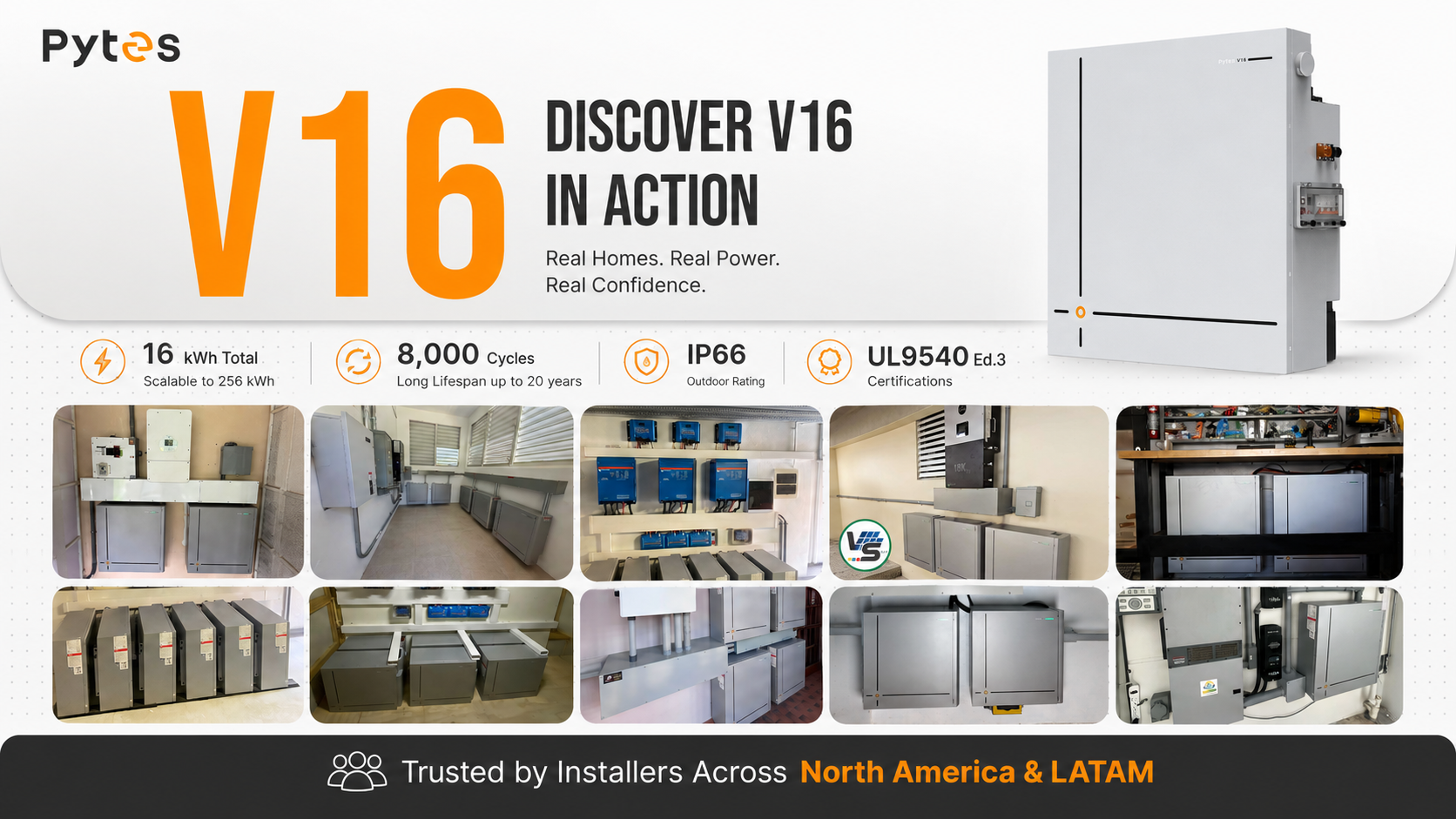
The Pytes V16 is a 16kWh residential battery energy storage system built with 314Ah large-format LFP cells. It is designed for residential energy storage applications where homeowners need more usable capacity, long-term reliability, and a safer battery platform for modern home energy systems.
LFP chemistry is widely recognized for its thermal stability, but Pytes believes chemistry alone is not enough.
Real safety must come from a complete system-level approach, including:
Cell selection
Battery module design
Cabinet structure
BMS protection
Electrical safety design
Thermal management
System-level fire validation
Passing UL 9540B large-scale fire testing gives V16 an additional layer of safety evidence beyond standard product messaging.
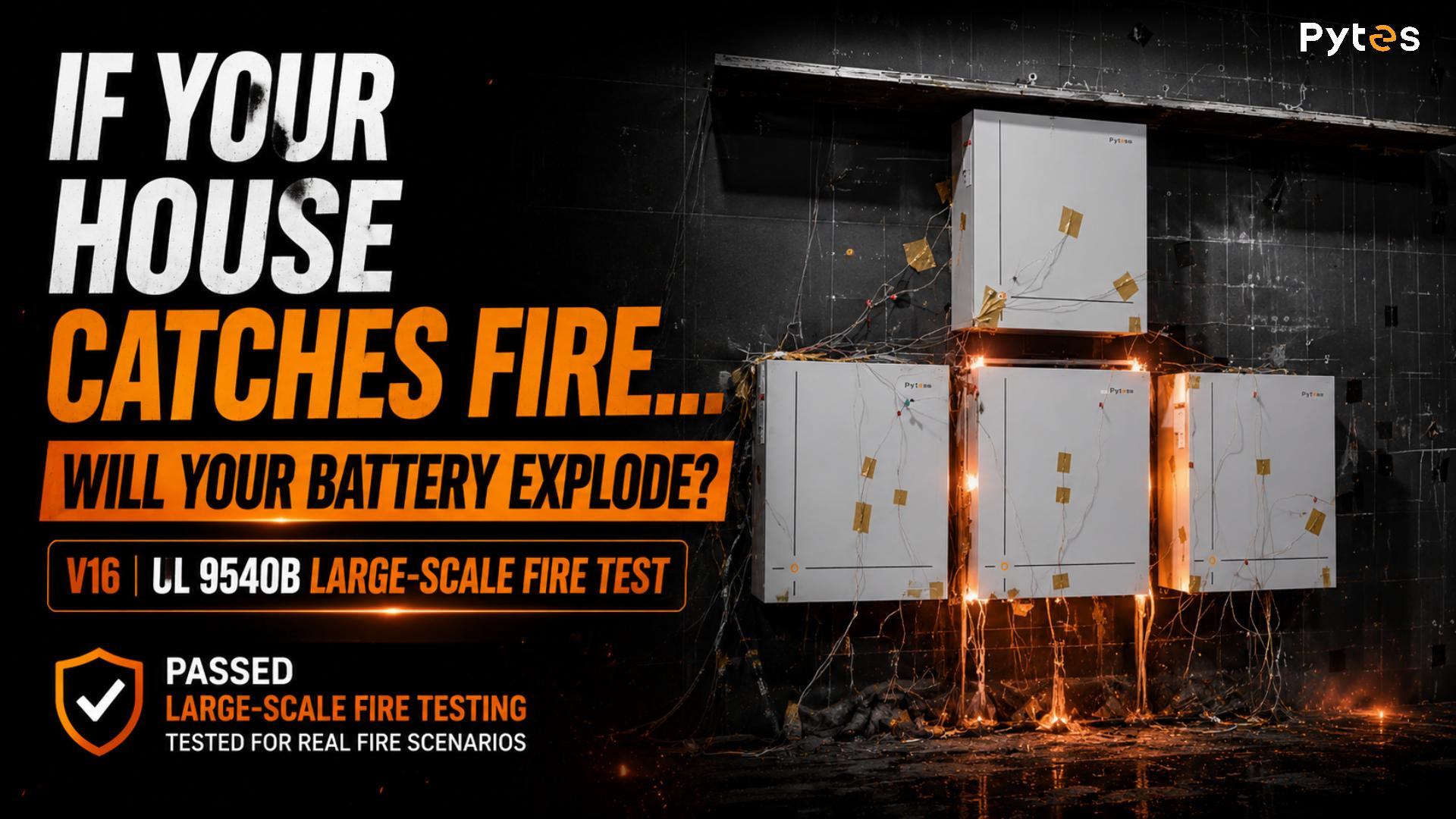
During the UL 9540B large-scale fire test, Pytes V16 was evaluated under a severe residential ESS fire scenario designed to assess fire behavior and propagation risk.
The V16 UL9540 B Test Video (Click to watch)shows a realistic fire environment, with open flame, heat, smoke, and high-intensity fire exposure around the battery system.
The key message from the test is clear:
Pytes V16 did not explode.
The fire did not spread uncontrollably from the battery system.
The battery cabinet remained structurally intact.
The result provides stronger safety validation for residential ESS installation discussions.
For installers, this is not just a lab result. It is a communication tool.
When a homeowner asks whether a battery is safe in the garage, or when an AHJ asks how the system behaves during a fire event, UL 9540B testing gives Pytes and its partners a stronger foundation for that conversation.
Many residential battery systems are installed in areas where space is limited and safety expectations are high. Garages, utility rooms, indoor walls, and residential electrical spaces all require a higher level of confidence.
The V16 UL 9540B test helps support that confidence by validating the system under a large-scale fire scenario.
For Pytes, the purpose of this test is not only to meet a new technical benchmark. It is to help the market move toward safer, more transparent, and more reliable residential energy storage adoption.
As energy storage systems continue to grow in power and capacity, the industry must move beyond simple specification comparisons.
Capacity matters.
Cycle life matters.
Compatibility matters.
But safety is what earns long-term trust.
By passing UL 9540B large-scale fire testing, Pytes V16 provides another layer of confidence for homeowners, installers, distributors, AHJs, and fire safety professionals.
Pytes will continue to invest in product safety, third-party testing, and real-world validation to support the responsible growth of residential and commercial energy storage.
Pytes V16 is built for more than backup power.
It is built for real-world safety.