As commercial and industrial energy users face rising electricity costs, increasing grid instability, and growing renewable energy adoption, energy storage systems are becoming a critical part of modern power infrastructure. However, not all battery systems deliver the same long-term value.
When evaluating an energy storage solution, factors such as cycle life, system efficiency, scalability, charging speed, operating temperature range, and safety certifications often have a much greater impact on project economics than the initial purchase price.
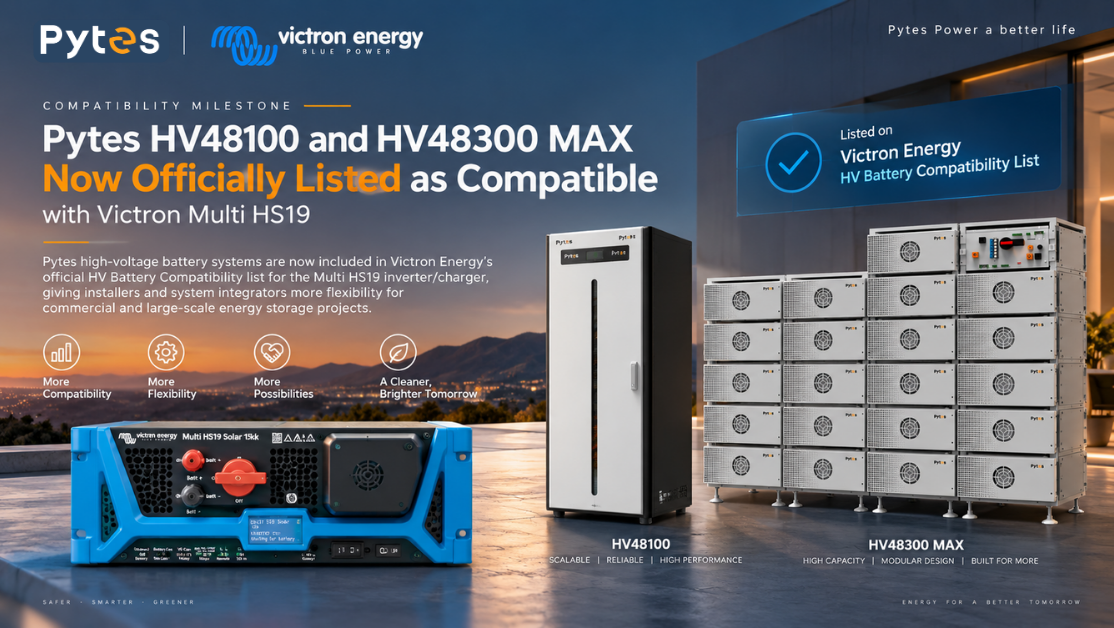
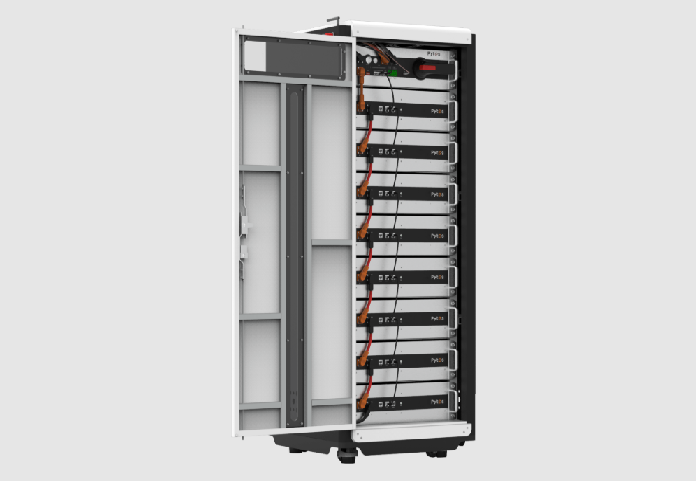
The Pytes HV48100 high-voltage energy storage system is designed specifically for applications requiring reliable backup power, peak shaving, photovoltaic energy storage, and distributed energy management. By combining high-performance LFP battery technology with a flexible modular architecture, the HV48100 provides a practical solution for buildings, factories, charging stations, and commercial facilities seeking long-term energy resilience.
At the core of the HV48100 system is a lithium iron phosphate (LFP) battery module rated at 5.12kWh, 51.2V, and 100Ah. Each module supports continuous charging and discharging currents of 50A while maintaining stable voltage performance across a working range of 47.5V to 57.6V.
Compared with traditional lead-acid technologies, LFP chemistry offers significantly higher safety, better thermal stability, and longer service life. For commercial installations expected to operate daily over many years, chemistry selection directly affects lifecycle costs.
The HV48100 utilizes Pytes' independent Battery Management System (BMS), which continuously monitors voltage, current, and temperature while balancing cells during charging and discharging. This intelligent management helps maintain consistent battery performance and extend overall system lifespan.
One of the most important metrics in energy storage is cycle life.
The HV48100 delivers more than 6,000 charge-discharge cycles, enabling years of continuous operation in demanding applications. For facilities performing one full cycle per day, this translates into well over 15 years of potential operational life under normal conditions.
This longevity significantly reduces replacement frequency compared with conventional battery technologies and improves the total return on investment for solar-plus-storage systems, backup power applications, and peak demand management projects.
Long cycle life becomes especially valuable in commercial environments where battery replacement can involve downtime, labor costs, and operational disruptions.
One challenge facing many energy projects is changing demand. A system that meets today's requirements may become undersized within a few years as loads increase or additional renewable generation is added.
The HV48100 addresses this challenge through a scalable architecture. Individual systems support configurations ranging from 25.6kWh to 76.8kWh using 5 to 15 battery modules, while intelligent control enables coordinated operation of multiple units. The system can support up to eight sets connected in series for larger energy storage deployments.
The Battery Control Unit (BCU) operates across a wide voltage range of 200V to 870V, providing compatibility with numerous inverter and power conversion system configurations. Communication interfaces include CAN, RS485, Dry Contact, and WiFi, simplifying integration into modern energy management systems.
This flexibility allows project developers and facility owners to start with current requirements and expand capacity as energy needs evolve.
Energy storage systems increasingly participate in applications requiring rapid energy replenishment.
The HV48100 is capable of achieving a full charge in approximately two hours, with each module supporting peak continuous output of 2.56kW. This capability allows operators to maximize energy capture during limited solar production windows or take advantage of off-peak electricity pricing periods.
Fast charging is particularly valuable in commercial facilities where electricity consumption patterns fluctuate significantly throughout the day.
By replenishing stored energy quickly, the system remains available for demand management, backup power, and energy arbitrage opportunities.
Energy storage systems are often deployed in environments where temperatures can vary significantly throughout the year.
The HV48100 is designed to operate with a charging temperature range of 0°C to 45°C and a discharging temperature range of -10°C to 50°C. This broad operating window enables deployment across a wide variety of geographic regions and environmental conditions.
For facilities located in areas with hot summers or cold winters, environmental adaptability helps ensure reliable year-round performance.
The system's IP20-rated cabinet integrates battery modules, high-voltage control components, and battery management functions into a compact distributed architecture suitable for indoor commercial and industrial installations.
The HV48100 has already been deployed in a variety of large-scale energy storage projects worldwide.
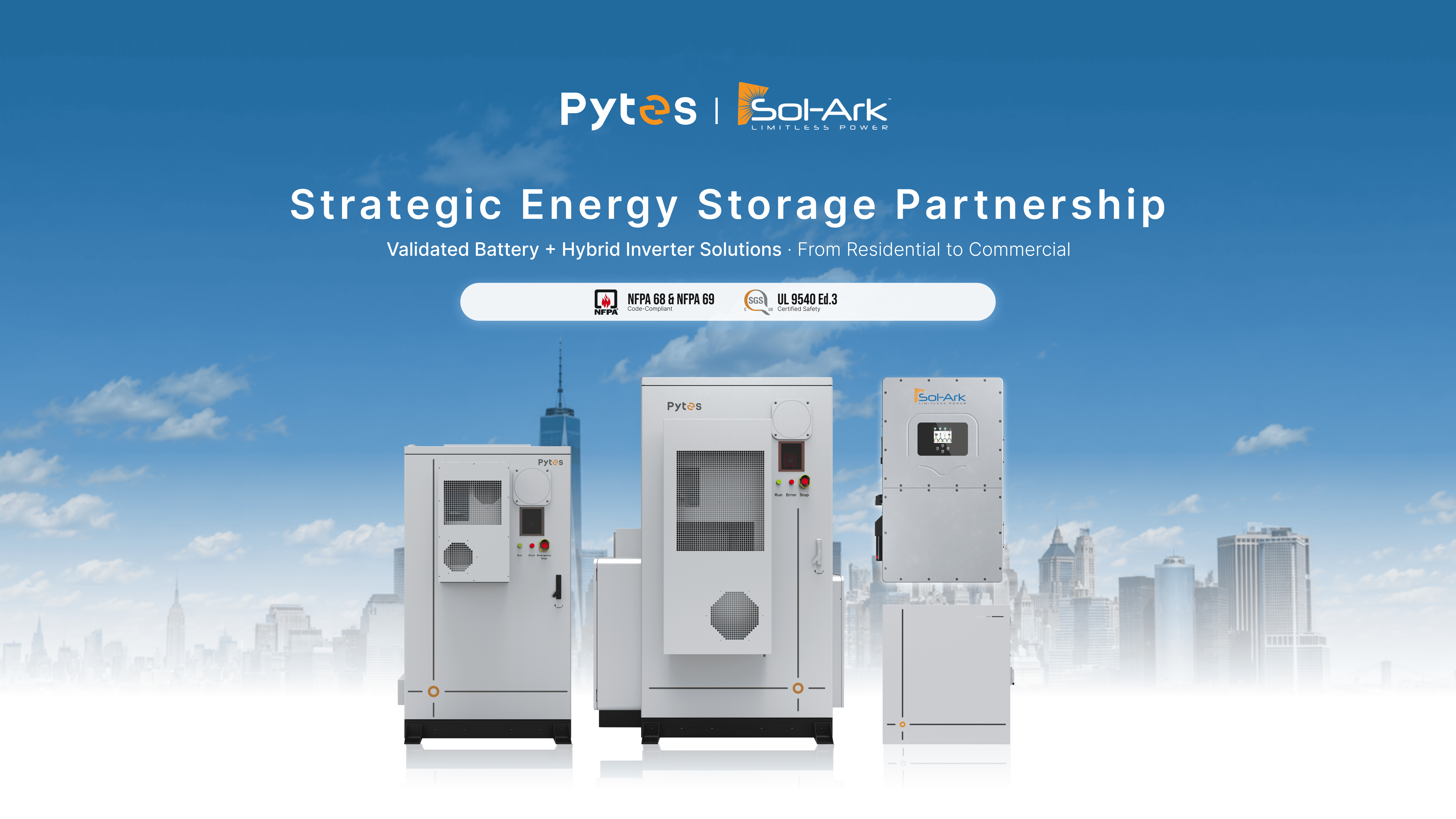
In Hawaii, a 163.84kWh installation combines four HV48100 high-voltage cabinets with Sol-Ark inverters to provide dependable energy reserves. Similar configurations have been deployed in Mexico, while a large hospital project in Yemen utilizes a 368.64kWh system consisting of six HV48100 clusters and multiple inverters to ensure reliable power availability for critical healthcare operations.
These installations demonstrate the system's ability to scale beyond residential applications and support demanding commercial and institutional energy requirements.
Energy storage safety remains a primary consideration for installers, facility owners, and regulatory authorities.
The HV48100 incorporates multi-layer battery monitoring and protection through its integrated BMS platform. In addition, the system has obtained important certifications including UL1973, CE, IEC62619, and UN38.3, demonstrating compliance with internationally recognized safety and transportation standards.
These certifications help streamline project approvals and provide additional confidence for long-term deployment.
The Pytes HV48100 is more than a standard battery cabinet. With 5.12kWh modular battery units, 100Ah capacity, over 6,000 cycles, 200V–870V operating voltage, two-hour charging capability, and scalable energy configurations up to 76.8kWh per system, it delivers the performance characteristics required by modern commercial and industrial energy projects.
For businesses seeking reliable backup power, peak shaving capabilities, solar energy storage, or distributed energy management, the HV48100 offers a combination of scalability, efficiency, safety, and long-term economic value that aligns with the evolving demands of today's energy landscape.